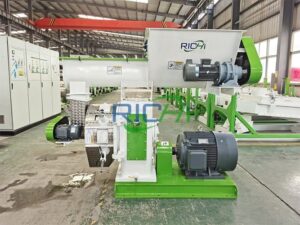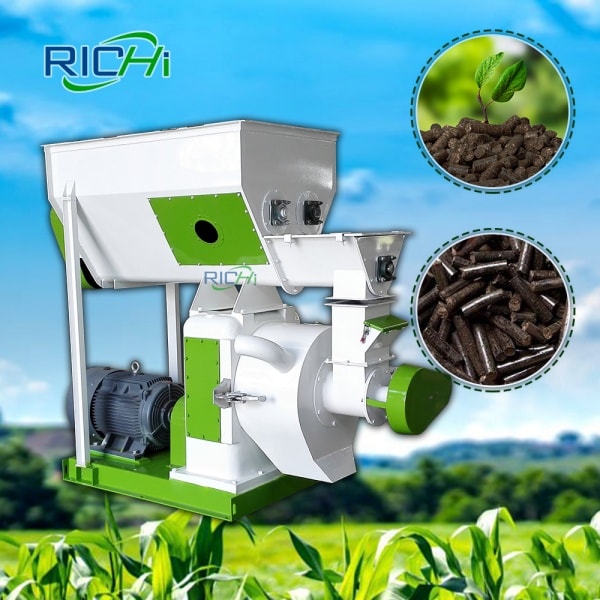
Turning chicken manure into organic fertilizer pellets requires more than a single pelletizing machine. Raw material moisture, processing capacity, drying requirements, formulation, automation, and finished-product handling can all affect the total investment.
For poultry farms and fertilizer producers, understanding these factors before purchasing equipment can make it easier to develop a practical project budget.
Raw Material Condition
Fresh chicken manure can contain a high level of moisture and may include feathers, bedding materials, feed residues, and other impurities.
The condition of the manure has a direct influence on the equipment configuration. Fresh material may require drying and additional preparation, while partially dried manure can require a simpler process.
Therefore, the chicken manure pellet machine price should be evaluated together with the supporting equipment needed to prepare the actual raw material.
Production Capacity
Capacity is another major factor affecting equipment investment.
A small poultry farm may produce a limited amount of manure each day and therefore need a relatively small production system. A large commercial poultry operation may generate enough material to justify continuous fertilizer pellet production.
Higher-capacity equipment generally requires larger motors, greater conveying capacity, and larger drying and cooling systems.
The production target should be calculated according to the actual daily manure supply instead of selecting equipment simply because it has a higher rated output.
Drying Requirements
Moisture control is often one of the most important stages in chicken manure processing.
Fresh manure normally needs to be dried before pelletizing. A rotary dryer can continuously reduce moisture and prepare the material for crushing and forming.
The required dryer capacity depends on the initial moisture content, target moisture, production capacity, and available heat source.
If the material has already been naturally or mechanically dried, the project may require less drying capacity.
Raw material testing is therefore useful before finalizing the equipment configuration.
Crushing and Formulation
After drying, chicken manure may need to be crushed to break up compacted material and create a more uniform feedstock.
If other organic materials or fertilizer ingredients are added, a mixer may also be required to achieve a consistent formulation.
These preparation stages can affect the overall investment, especially when the plant is designed to produce several fertilizer formulations.
The equipment should be selected according to the complete raw material recipe rather than chicken manure alone.
Comparing Different Organic Materials
Chicken manure is only one type of organic fertilizer raw material.
For businesses that process other livestock manure, a cow dung pellet making machine price can provide a useful reference when comparing different equipment configurations. However, cow dung and chicken manure can have different moisture and fiber characteristics, so the preparation process may not be identical.
The equipment quotation should therefore be based on the actual material to be processed.
Pelletizing Process
After preparation, the material enters the pelletizing section.
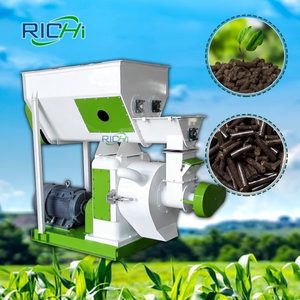
Inside the pellet mill, rollers compress the prepared material through die holes, forming cylindrical fertilizer pellets.
The die determines the approximate pellet diameter, while moisture, particle size, formulation, and operating conditions affect production performance.
A properly selected pelletizer should have sufficient capacity for the prepared material supplied by the upstream equipment.
The entire production line should be balanced so that the dryer, crusher, pellet mill, cooler, and screen can operate without creating major bottlenecks.
Cooling and Screening
Fresh fertilizer pellets can retain heat after compression.
A cooling system reduces pellet temperature before storage or packaging. Screening then removes loose fines and undersized pellets from the finished product.
These processes can improve the consistency of the final fertilizer and make downstream handling easier.
For commercial production, conveying equipment can connect the pelletizing, cooling, screening, and storage sections.
Automation Level
Automation also affects the initial investment.
A basic fertilizer pellet plant can use manual feeding and packaging, which may be suitable for smaller farms.
Larger commercial facilities can use automatic feeding, mechanical conveying, centralized control systems, automatic weighing, and automatic packing.
The right automation level depends on production capacity, labor availability, operating hours, and the customer’s budget.
Equipment Configuration
A typical chicken manure fertilizer pellet project may include:
- Raw material receiving
- Cleaning or screening when necessary
- Drying
- Crushing
- Mixing
- Pelletizing
- Cooling
- Screening
- Conveying
- Storage or packing
Not every project needs all of these machines.
A plant using partially dried and relatively clean manure may require a simpler configuration than one processing fresh manure with additional fertilizer ingredients.
How to Compare Supplier Quotations
When comparing equipment quotations, buyers should check the complete configuration instead of comparing only the main machine price.
Important items include:
- Production capacity
- Initial and target moisture
- Dryer capacity
- Crusher specifications
- Mixer configuration
- Pellet diameter
- Cooler
- Screening system
- Conveyors
- Electrical control
- Installation and spare parts
This makes it easier to understand why quotations from different suppliers may vary.
Final Considerations
The investment required for chicken manure pellet production depends on the raw material condition and the complete processing configuration.
Before requesting a final quotation, project owners should provide information about daily manure availability, moisture content, desired pellet size, additional ingredients, production capacity, and packaging requirements.
With these details, the equipment can be matched more accurately to the actual production conditions, helping avoid unnecessary investment while maintaining a practical production flow.
For additional information about organic fertilizer pellet production and equipment selection, read here.
Related Post: https://pelletizerequipment.com/straw-pellet-mill/