Cow manure is often treated simply as an agricultural waste, but it can also become a useful biomass resource when it is properly collected, processed, and managed. In livestock-intensive areas, converting manure into compact pellets can make transportation, storage, and utilization more convenient.
However, turning fresh cow manure into stable pellets is not as simple as feeding it directly into a pellet mill. Moisture content, fiber structure, particle size, drying conditions, and the intended use of the finished pellets all influence the processing method.
For farmers and agricultural businesses considering manure recycling, understanding the complete process is more useful than focusing on a single machine. The right production system depends on the characteristics of the manure, the available drying conditions, the required output, and whether the finished pellets are intended for fuel, soil improvement, composting, or another application.
This article explores the main questions surrounding cow manure pellet production and explains how a practical processing line can be planned.
Why Consider Processing Cow Manure Into Pellets?
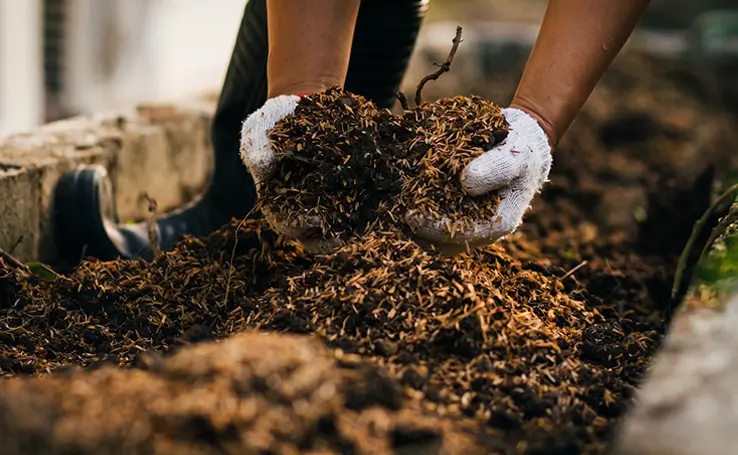
Fresh cow manure has a high moisture content and usually contains a mixture of feces, urine, bedding materials, fibers, and other organic matter.
Moving and storing loose manure can be inconvenient because it occupies considerable space and may have an unpleasant odor. Its physical condition can also make long-distance transportation inefficient.
Pelletizing changes the physical form of the material.
After appropriate drying and preparation, the manure can be compressed into relatively dense cylindrical particles. The resulting pellets are easier to handle and can be stored in bags or bulk containers.
The value of the process depends heavily on the final application.
For biomass fuel production, the organic matter can be converted into a denser solid fuel after sufficient drying. For agricultural applications, processed manure may be incorporated into organic fertilizer or soil-improvement systems.
Therefore, the intended end use should be determined before the processing equipment is selected.
Can Fresh Cow Manure Be Pelletized Directly?
Generally, fresh manure requires preparation before efficient pelletizing.
The biggest issue is usually moisture.
Fresh cow manure can contain a substantial amount of water, and its moisture level can vary according to animal diet, weather, manure collection methods, bedding, and storage conditions.
If the material is too wet, it may not form stable pellets. It can also stick to equipment and make feeding inconsistent.
On the other hand, excessively dry material may have poor binding characteristics or require additional conditioning.
The practical objective is to bring the material into a suitable physical condition for pelletizing.
This is why drying is often one of the most important stages in a manure pellet production process.
How Does Moisture Affect Pellet Quality?
Moisture has a major influence on the behavior of biomass during compression.
When manure contains too much water, the pellet mill may have difficulty compressing the material consistently. The finished pellets may be soft, unstable, or prone to deformation.
When the material is too dry, the opposite problem can occur. The particles may not bind effectively, and excessive dust or fines may be generated.
The suitable moisture range depends on the manure characteristics, pellet mill design, particle size, and intended product.
For this reason, moisture should be monitored rather than estimated only by appearance.
In commercial production, moisture meters and controlled drying systems can help operators maintain more consistent feed conditions for the pellet mill.
What Happens Before Pelletizing?
The preparation process usually involves several steps.
First, the collected manure is inspected and cleaned.
Second, oversized pieces or fibrous materials may need to be reduced in size.
Third, the material is dried to an appropriate moisture level.
Fourth, it may be ground or screened to improve particle uniformity.
Only after these preparation steps is the material ready for pelletizing.
The exact sequence depends on the initial condition of the manure.
Very wet material may require intensive drying before grinding, while partially dried manure mixed with plant residues may need a different preparation route.
The process should therefore be designed around the actual raw material rather than following a fixed equipment list.
What Type of Pellet Is Being Produced?
The intended use of the final product determines many design decisions.
If the pellets are intended as biomass fuel, relatively high density and consistent moisture are important. The production process should also consider combustion characteristics, ash content, and storage stability.
If the pellets are intended for fertilizer-related applications, the processing objectives may be different.
In some cases, pelletizing is used mainly to improve handling and transportation rather than to create a fuel product.
This distinction matters because the same raw material can be processed in different ways depending on its final purpose.
Before purchasing equipment, the producer should clearly define what the pellets are supposed to achieve.
How Does a Pellet Mill Compress Cow Manure?
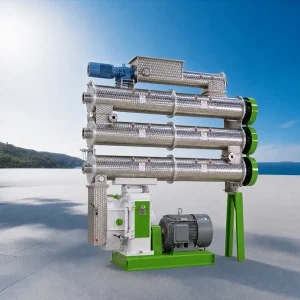
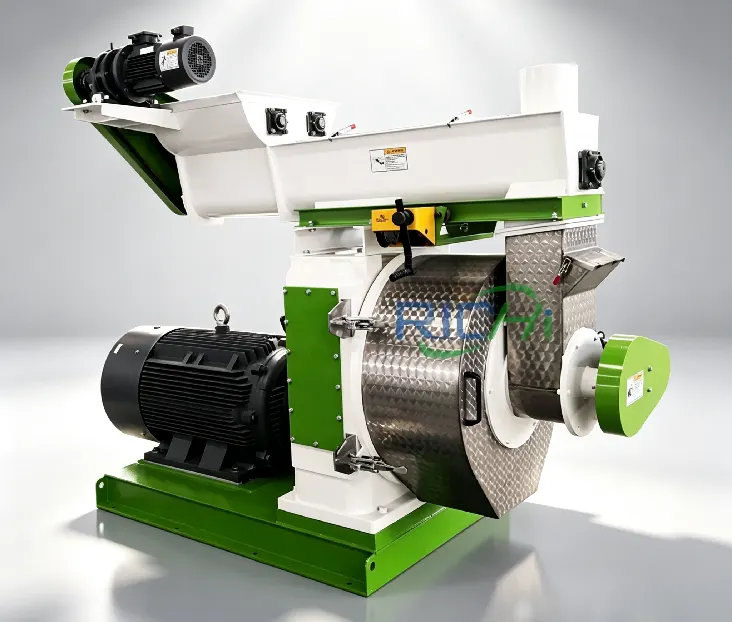
A pellet mill uses mechanical pressure to force prepared biomass through holes in a die.
As the material moves through the compression chamber, rollers press it against the die surface. The material passes through the openings and is cut into pellets as it exits.
The final pellet diameter depends largely on the die.
The compression ratio, moisture level, particle size, fiber content, and machine operating conditions all influence pellet formation.
This means that a pellet mill does not work independently from the preparation system.
If the manure entering the pellet mill is inconsistent, even a high-capacity machine may produce unstable results.
Good pellet production therefore begins with good raw-material preparation.
What Should Be Considered When Choosing a Pellet Machine?
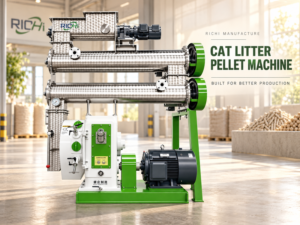
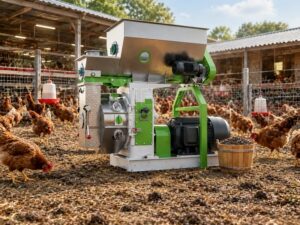
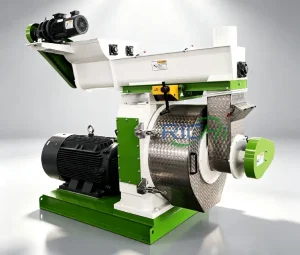
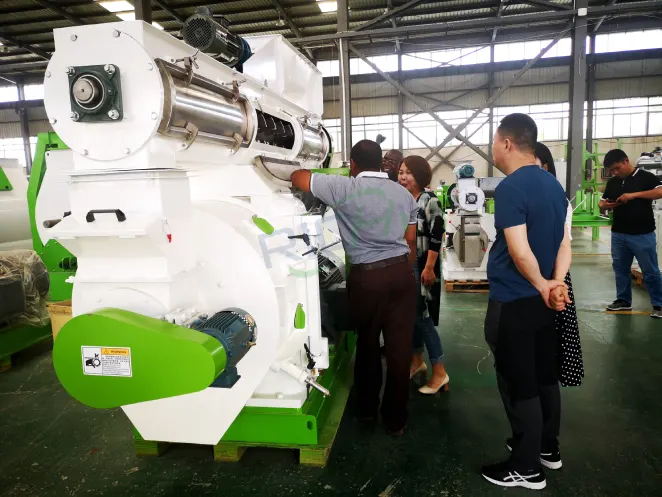
The cow dung pellet making machine should be selected according to the material characteristics and expected production volume.
Capacity is one of the first considerations. A small farm processing a few hundred kilograms per hour does not necessarily need the same equipment as a commercial biomass operation producing several tons per hour.
Motor power, die diameter, compression characteristics, feeding method, cooling requirements, and ease of maintenance should also be considered.
The machine should also be compatible with the prepared manure.
A pellet mill designed for relatively dry biomass may require different operating conditions from one processing a material with higher fiber or moisture content.
Testing the actual feedstock can therefore provide useful information before making a final equipment decision.
Does Pellet Diameter Matter?
Yes. Pellet diameter affects handling, storage, and the intended application.
Smaller pellets may provide more uniform combustion in some biomass systems, while larger pellets can sometimes be easier to handle.
The appropriate diameter depends on the application and customer requirements.
Different dies can generally be used to produce different pellet sizes, but changing the die also affects production conditions.
If a production facility expects to supply several markets, it may need to consider multiple pellet specifications from the beginning.
The final product should therefore be defined before the equipment configuration is finalized.
How Much Does a Complete Production Line Cost?
The investment depends heavily on the condition of the raw material and the desired production capacity.
A small project that already has a suitable drying area may need only basic grinding, pelletizing, cooling, and packing equipment.
A larger project may require manure collection systems, separators, dryers, grinders, conveyors, pellet mills, coolers, screeners, storage equipment, and automatic packing.
Therefore, when asking how much does a cow dung pellet production line cost, it is necessary to define the scope of the project first.
The cost of the pellet mill alone does not represent the investment required for a complete production system.
Drying capacity can be particularly important because a large dryer, fuel system, heat source, and dust-control equipment can significantly influence the total project budget.
What Other Equipment May Be Needed?
A complete manure pellet line can contain several auxiliary systems.
Raw-material handling:
Conveyors, hoppers, and feeding systems move manure between processing stages.
Cleaning and separation:
These systems remove stones, metal, plastics, and other unwanted materials.
Drying:
Dryers reduce moisture to a suitable level.
Grinding:
Grinders create a more uniform particle size.
Pelletizing:
The pellet mill compresses the prepared material into pellets.
Cooling:
Fresh pellets are cooled and stabilized after compression.
Screening:
Fines and undersized particles can be separated from finished pellets.
Packing:
The finished material can be packed into bags or prepared for bulk transportation.
Not every project needs all of these machines. The appropriate configuration depends on the starting material and the final product.
Related Post: https://commercialpelletmill.com/organic-fertilizer-machine/
Can Cow Manure Pellets Be Used as Biomass Fuel?
Under suitable conditions, dried manure can be used as a biomass fuel because it contains organic matter.
However, fuel performance depends on moisture content, ash content, organic composition, and other characteristics.
Manure generally contains more mineral matter than clean wood biomass, which can result in higher ash levels.
Therefore, manure pellets should not automatically be treated as equivalent to wood pellets.
Before large-scale fuel production, it is useful to evaluate calorific value, ash characteristics, emissions considerations, and the requirements of the intended combustion system.
The final application should comply with applicable local regulations and equipment specifications.
Can Pelletized Manure Be Used in Agriculture?
Processed manure can also have agricultural applications because it contains organic matter and plant nutrients.
Pelletizing can make the material easier to store, transport, and apply.
However, pelletizing itself does not automatically make manure a complete fertilizer.
Nutrient composition depends on animal diet, manure collection, bedding materials, processing conditions, and storage.
Testing the finished product can help determine nutrient content and appropriate application rates.
For commercial fertilizer production, additional processing or blending may be required depending on the target product and local regulations.
Does the Production Line Need Automation?
Automation becomes more useful as production capacity increases.
A small farm may manually feed, monitor, and pack the pellets.
A commercial operation may need automated conveyors, temperature monitoring, moisture control, centralized equipment control, and automatic packaging.
Automation can improve consistency and reduce repetitive labor, but it also increases the initial investment.
There is therefore no universal automation level that suits every manure pellet project.
The best approach is to automate the processes where consistent control provides a clear practical benefit.
How Should the Plant Layout Be Designed?
The layout should follow the natural flow of materials.
A typical process may begin with manure receiving, followed by cleaning, drying, grinding, pelletizing, cooling, screening, and storage.
Keeping these stages logically connected can reduce unnecessary transportation and simplify operation.
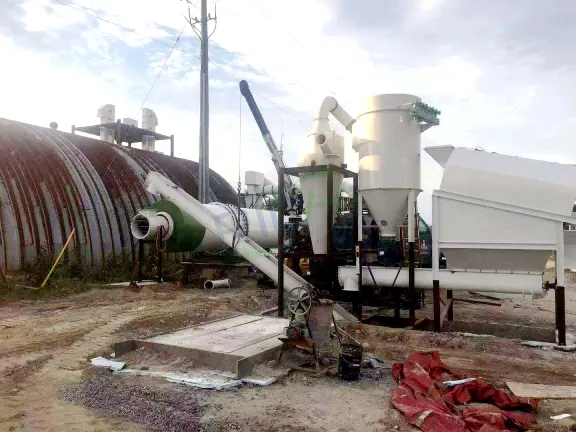
Drying equipment may require additional space because of its size and supporting systems.
The plant should also reserve sufficient room around major machines for inspection, cleaning, maintenance, and replacement of wear parts.
For larger facilities, separate areas for raw materials and finished products can improve inventory management and reduce cross-contamination.
How Can Energy Consumption Be Reduced?
Drying is often one of the largest energy-consuming stages in manure pellet production.
Reducing the amount of water that needs to be evaporated can therefore have a major effect on operating costs.
Natural pre-drying, efficient heat recovery, insulation, and proper dryer operation can help reduce energy consumption.
Grinding and pelletizing also consume electricity.
Using appropriately sized motors and avoiding unnecessary over-processing can improve energy efficiency.
Energy-saving measures should be evaluated as part of the complete production system rather than focusing on one machine.
What Factors Influence Production Capacity?
Production capacity depends on more than the nominal output of the pellet mill.
The drying system must be able to prepare enough material for the pellet mill. The grinder needs sufficient capacity to maintain the required feed rate. Cooling and screening must also handle the finished pellets.
If any stage is significantly smaller than the others, it can become the bottleneck.
For example, a pellet mill rated for several tons per hour cannot maintain that output if the dryer only prepares half that amount.
Capacity should therefore be balanced across the complete line.
This is particularly important when planning commercial projects.
What Should Be Checked Before Buying Equipment?
Before purchasing equipment, several questions should be answered.
How much manure is available each day?
What is its average moisture content?
Does it contain bedding materials?
What foreign materials need to be removed?
What is the intended use of the pellets?
What pellet diameter is required?
How many tons per hour should the line produce?
How much land is available?
Is natural drying practical?
What energy sources are available?
What type of storage is required?
Answering these questions provides a much stronger foundation for equipment selection than simply searching for a machine with a particular output.
How Can Different Equipment Suppliers Be Compared?
When comparing suppliers, it is useful to examine the complete process rather than focusing only on the main pellet machine.
The scope of supply should be clearly defined.
One supplier may provide only the pellet mill, while another may include drying, grinding, cooling, screening, conveying, and packing.
The technical specifications should also be compared, including capacity, motor power, moisture requirements, pellet diameter, automation, and installation scope.
Technical support is another consideration, especially for projects involving several interconnected machines.
For additional technical references and equipment information, get more information about the complete process before comparing individual machine quotations.
This approach can help prevent misunderstandings about what is included in a project budget.
What Role Does the Equipment Manufacturer Play?
A manure pellet project can involve several different processing stages, so communication with the equipment manufacturer is useful during the design stage.
The manufacturer may need information about manure moisture, daily availability, raw-material composition, target capacity, pellet diameter, intended use, and local installation conditions.
These details help determine whether the project requires a simple pelletizing system or a complete processing line.
When researching potential suppliers, pellet machine can be included among the companies considered for technical information about biomass and pellet-processing equipment.
The important point is to evaluate the proposed equipment against the actual raw material and production requirements rather than relying only on general equipment descriptions.
How Should a New Project Be Planned?
A practical project can be divided into several stages.
First, assess the available manure and its physical characteristics.
Second, determine the intended use of the pellets.
Third, conduct basic testing of moisture, particle characteristics, and other relevant properties.
Fourth, establish the required daily production capacity.
Fifth, design the preparation and pelletizing process.
Sixth, calculate equipment, building, energy, labor, storage, and transportation costs.
Finally, compare different technical configurations and determine whether the project is economically practical.
This step-by-step approach reduces the risk of purchasing equipment before the basic production conditions are understood.
Final Thoughts: What Makes a Manure Pellet Project Work?
Turning cow manure into pellets is fundamentally a resource-utilization process.
The quality of the finished product depends on the entire chain, from manure collection and cleaning to drying, grinding, pelletizing, cooling, screening, and storage.
Among these stages, moisture management is particularly important because fresh manure can contain a large amount of water.
The intended application also needs to be defined early. Fuel pellets and agricultural products can have different technical requirements, so the processing system should be designed accordingly.
Cost is another issue that should be considered at the system level. A pellet mill represents only one part of the investment. Drying, conveying, storage, cooling, screening, electrical systems, construction, and packaging can all influence the final budget.
For that reason, the most practical way to evaluate a manure pellet project is to begin with the raw material and the final product rather than starting with a particular machine.
With suitable raw-material preparation, balanced equipment capacities, appropriate moisture control, and a clearly defined end use, cow manure can be transformed from a difficult-to-handle agricultural residue into a more convenient and potentially useful pelletized resource.