Small fish farms rarely fail because the owner does not know how to raise fish. They fail because the numbers stop working. Feed, fuel, labor, pond repairs, seed stock, and medicine all compete for the same limited cash. When fish prices stay flat and feed prices rise, the farm may still produce a good crop and still lose money. This is why feed cost has become one of the most important topics in small and mid-size aquaculture.
The pressure is not limited to one country or one species. Tilapia, catfish, carp, shrimp, and marine fish farms all face similar questions. How much feed is wasted? Can local ingredients replace part of the expensive formula? Is it better to buy finished feed or produce feed on the farm? Should the operation invest in better storage, feeding equipment, or a small processing line? These decisions shape whether a farm survives a difficult season.
The Quiet Pressure Behind Every Pond
A pond looks simple from the bank. Under the water, however, every day is a biological and economic calculation. Fish need protein, energy, vitamins, and minerals. They also need feed that stays in a form they can eat. If pellets break apart too quickly, nutrients dissolve into the water. The fish may never get them. The farmer pays for feed that becomes pond sludge.
Shrimp farms feel this even more sharply. Shrimp feed slowly and often search the bottom. A pellet that loses its shape in water can disappear before it is eaten. The result is higher feed conversion ratios, poorer growth, and more waste in the pond. In many cases, the farmer responds by feeding more. That raises cost and can make water quality worse.
The same logic applies to fish. Overfeeding does not guarantee faster growth. It often leads to oxygen problems, ammonia buildup, and disease. Underfeeding saves money in the short term but slows growth and delays harvest. The farm then carries the fish longer, which means more risk and more daily cost.
Feed Is Usually the Largest Operating Expense
In most aquaculture operations, feed is the largest single cost. It can easily take more than half of total production cost. When feed prices move, the whole business plan moves with them. A small change in feed cost per ton may look minor on paper. Over a full cycle, it can decide whether the farm makes a profit.
Several forces push feed prices up and down. The cost of fishmeal and soybean meal matters. So do energy prices, shipping, currency exchange rates, and local harvest conditions. A drought in one region can raise the price of a protein ingredient used on the other side of the world. A port delay can leave a feed mill short of raw material. Farmers cannot control these forces, but they can control how efficiently they use the feed they buy.
This is why feed efficiency deserves more attention than feed price alone. A cheap bag of feed that produces poor growth is not cheap. A more expensive feed that converts well, holds together in water, and keeps fish healthy may cost less per kilogram of fish produced. The calculation should always be based on output, not on the label price.
Why a Low Bag Price Can Hide a High Production Cost
Farmers often compare feed by price per bag. That comparison is incomplete. Two feeds may look similar but behave very differently in the pond. One may contain more fines. Another may contain ingredients that are difficult to digest. A third may smell fresh but lose stability within minutes in water.
The real cost includes several hidden factors:
- How much feed is actually eaten?
- How much breaks down before consumption?
- How much does the feed improve growth?
- How much does it affect water quality?
- How much storage space and attention does it require?
- How consistent is the supply?
A feed that creates more waste may force the farmer to increase aeration, exchange more water, or use more treatment chemicals. Those costs do not appear on the feed invoice, but they are real. In shrimp ponds, poor feed stability can contribute to bottom sludge and disease pressure. In cages, fines may drift away before fish can eat them.
The smartest buyers test feed rather than simply trusting a price list. They watch how fish respond. They check whether pellets sink at the right speed. They look at the amount of fines in the bag. They record feed conversion and survival rates. Over time, this records become more useful than any sales pitch.
Water Stability and Feed Waste
Water stability is one of the clearest differences between aquatic feed and land animal feed. A poultry pellet only needs to survive handling and eating. A shrimp pellet may need to remain intact on the pond bottom for a certain period. A fish pellet must match the feeding behavior of the species. If it fails, the feed is lost.
Several factors affect water stability. Particle size matters. So does starch gelatinization, protein source, binder type, oil content, and cooling. A pellet that is properly conditioned and cooled will usually hold together better than one that is pushed through the mill too quickly. The die condition also matters. Worn dies can produce cracks and weak spots.
Farmers cannot always see these problems directly. They may notice more fines at the bottom of the bag. They may see fish feeding less aggressively. They may find feed on the pond bottom during sampling. These are signs that feed is not being used efficiently. Fixing the problem may involve changing the feed supplier, adjusting the formula, improving storage, or changing feeding method.
Raw Materials: Local Advantage and Local Limits
Local raw materials can reduce feed cost, but they are not a simple solution. Rice bran, wheat bran, cassava, corn, soybean meal, rapeseed meal, fishmeal, poultry by-product meal, and food processing waste are all used in different regions. Each has strengths and weaknesses.
Rice bran and wheat bran can provide energy and fiber, but quality varies. If the bran is old or high in moisture, it may cause storage problems. Cassava can be a useful starch source, but it must be processed correctly. Soybean meal is a common protein source, but its price follows global markets. Fishmeal is excellent for many aquatic species, but it is expensive and supply is limited.
Protein is usually the most expensive part of the formula. Farmers and feed producers therefore look for alternatives. Insect meal, single-cell protein, fermented plant proteins, and by-products from food processing have all attracted interest. Some can replace part of the fishmeal. Others improve sustainability scores. But alternative ingredients often change pellet behavior. They may need different grinding, conditioning, or binding. A formula that works in the laboratory may not run well in a small feed mill.
The Protein Problem
Protein is not just a nutrient. It is a cost driver and a marketing issue. Buyers of fish and shrimp increasingly ask where the protein comes from. Some markets want to avoid feed linked to overfishing. Others want to reduce reliance on imported ingredients. This creates pressure to use more local and alternative proteins.
However, replacing fishmeal is not only a matter of mixing different ingredients. The new formula must support growth, health, and pellet quality. It must also be available in reliable quantities. A farm cannot switch to an alternative protein if the supply disappears after two months. It cannot use an ingredient that creates soft pellets or high fines. The practical solution is usually a gradual change, tested over several production cycles.
Sinking, Floating, and Feeding Behavior
Aquatic species do not all feed the same way. Some take feed at the surface. Some feed in the water column. Others search the bottom. Floating feed is popular in some tilapia and catfish farms because the farmer can see whether the fish are eating. Sinking feed is common in shrimp farming and for many marine species.
The choice affects cost. Floating feed may reduce waste because the farmer can observe feeding activity and adjust the amount. Sinking feed may be more natural for bottom feeders, but uneaten pellets are harder to see. If the pellet is not stable, the farmer may not know how much is being lost.
Feed producers and farmers should match pellet type to species and system. A pellet designed for one species may sink too fast or too slowly for another. It may be too hard for small fish or too soft for shrimp. These details influence growth and feed conversion.
When On-Farm Feed Production Starts to Make Sense
On-farm feed production can reduce cost when several conditions are met. The farm must have access to affordable raw materials. It must have reliable power, water, and labor. It must be able to store ingredients properly. Most importantly, it must be able to produce consistent feed. Inconsistent feed can be worse than buying from a professional mill.
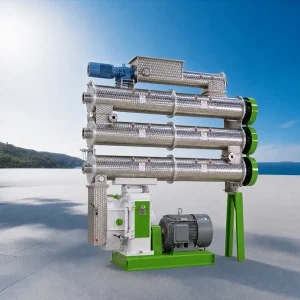
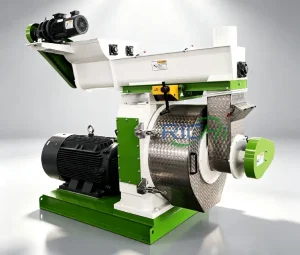
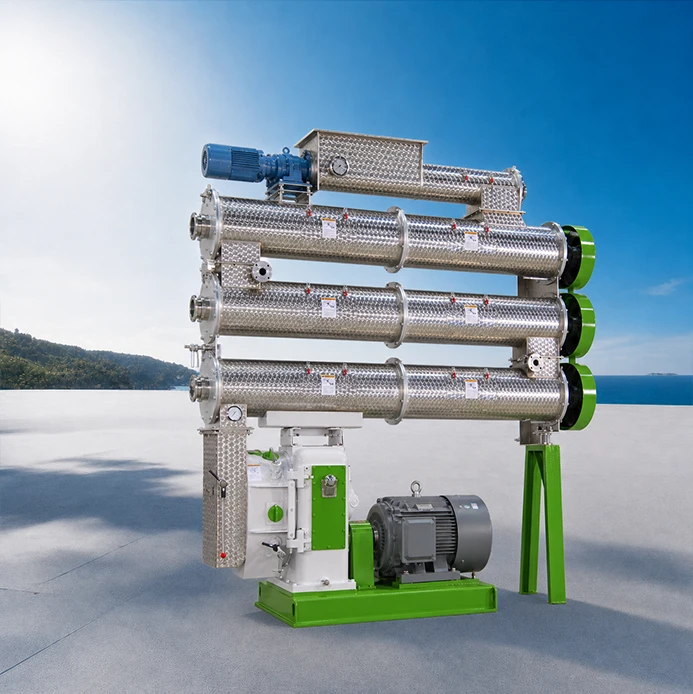
For farms that produce sinking aquatic feed, a ring die pellet machine can press conditioned mash into dense pellets. This approach is often used for shrimp feed and certain fish feeds where water stability is important. The machine is only one part of the system. Grinding, mixing, steam conditioning, cooling, screening, and storage all affect the final pellet. A farm that buys a pellet mill but ignores the rest of the line may end up with poor results.
On-farm production also changes the farmer’s role. The owner becomes a feed producer as well as a fish farmer. That means sourcing ingredients, managing formulas, testing quality, and maintaining equipment. Some farms handle this well. Others find that the extra work distracts from pond management. The decision should be based on numbers, not on the idea that making feed is always cheaper.
The Hidden Cost of Poor Pelleting and Cooling
Pelleting is not just shaping. It is a physical and chemical process. Heat, moisture, pressure, and time all interact. If the mash is too dry, the pellets may be weak. If it is too wet, the die may block. If the die is worn, the pellets may have cracks. If the cooler is undersized, moisture may remain inside the pellet.
Cooling is especially important in humid climates. Warm pellets can sweat inside bags. Moisture migration encourages mold and reduces shelf life. In severe cases, the feed becomes unsafe. Farmers may blame the formula when the real problem is cooling or storage.
A small feed line should therefore be designed as a complete system. The capacity of the grinder, mixer, conditioner, pellet mill, cooler, and bagging scale should match. If one step is too slow, the whole line suffers. If one step is too fast, quality drops. Matching equipment is more important than buying the largest machine.
Building a Small Feed Line Without Overcapitalizing
Many projects fail because the owner buys too much capacity too soon. A large line may look impressive, but it needs more power, more labor, more maintenance, and more working capital. If the farm cannot keep it busy, the cost per ton rises. A smaller line that runs regularly may be more profitable.
When farmers search for a ring die aquatic feed pellet mill for sale, they should first define the product. What species will the feed serve? What pellet size is needed? How much feed is required per day? What raw materials will be used? What is the available steam supply? What level of automation can the team operate? These questions matter more than a list of motor sizes.
The project should also include space for storage and future expansion. Raw materials need dry storage. Finished feed needs a clean, dry area. Traffic flow should allow trucks or bags to move without blocking production. Dust control and safety systems should not be ignored. The cheapest installation may become the most expensive if it causes downtime or accidents.
Quality Control With Simple Tools
A small feed operation does not need a large laboratory to improve quality. It needs discipline. Simple checks can catch many problems before they become serious.
- Check ingredient moisture before storage.
- Check particle size after grinding.
- Check mixing time and uniformity.
- Check steam quality and conditioning temperature.
- Check pellet appearance and fines.
- Check cooler discharge temperature and moisture.
- Check water stability with a simple glass of water.
These tests do not replace professional analysis, but they help operators understand the process. If a batch looks different, the operator can record what changed. Over time, the farm builds its own knowledge of local ingredients and conditions.
Storage, Moisture, and Mold
Feed can be well made and still be ruined in storage. Moisture is the enemy. Bags should be stacked on pallets, not directly on the floor. The storage area should be dry and ventilated. Rain and ground water must be kept out. Rodents and insects should be controlled.
In tropical regions, high humidity makes storage even more difficult. Feed should not be kept longer than necessary. The oldest stock should be used first. If bags feel warm or damp, the feed should be inspected. Moldy feed should not be fed to fish or shrimp. The cost of losing a batch is much higher than the cost of better storage.
Working With Feed Suppliers and Equipment Partners
Farmers do not have to solve every problem alone. Feed suppliers can provide formulas and technical advice. Equipment suppliers can provide layouts, training, and spare parts. The best partners ask detailed questions. They want to know the species, the raw materials, the water conditions, and the production target. They do not simply send a price list.
Some buyers begin by reviewing a manufacturer’s background, such as Richi Pellet Machine, before discussing a project. That is a reasonable step, but it should be followed by deeper checks. Ask how the supplier handles installation, commissioning, and after-sales support. Ask what spare parts are recommended. Ask whether they can provide references from similar projects. A supplier who understands aquatic feed will talk about water stability, formula, and cooling, not only about tonnage.
Financing the Change
Improving feed efficiency often requires investment. A farm may need better storage, a new feeder, a moisture meter, or a small processing line. The money may come from savings, loans, grants, or cooperative funds. Each source has different costs and conditions.
The investment should be evaluated over its useful life. A storage improvement may reduce spoilage and pay back quickly. A feed line may take longer. The farmer should calculate the expected savings and compare them with the loan payment, maintenance, and labor cost. If the numbers are uncertain, a pilot project is safer than a full-scale investment.
Market Signals Farmers Should Watch
Fish and shrimp prices do not move in a straight line. They respond to local supply, imports, festivals, export demand, and consumer income. Feed prices also move. Farmers who watch both sides can make better decisions about stocking, harvest timing, and feed purchasing.
Some farmers reduce risk by raising more than one species. Others sell at different sizes. Some work with cooperatives to buy feed in bulk or negotiate better prices. Contract farming can provide a market, but it may also reduce independence. There is no single strategy that works for everyone. The key is to understand the local market and keep records.
Environmental Rules and Community Pressure
Aquaculture is under growing scrutiny. Ponds and cages can release nutrients into surrounding water. Uneaten feed and waste can harm local ecosystems. In some regions, regulations on discharge, land use, and water quality are becoming stricter.
Feed efficiency is part of the solution. When fish and shrimp eat more of the feed, less waste enters the water. Better water stability reduces nutrient loss. Proper storage prevents spoiled feed from being dumped. Alternative proteins can reduce pressure on wild fish stocks. These changes help the environment and the farm’s bottom line.
What Farmers Can Control
Farmers cannot control the weather, global commodity prices, or disease outbreaks. They can control many daily decisions. They can feed carefully. They can store feed properly. They can maintain equipment. They can record results. They can train workers. They can choose suppliers who provide consistent quality.
These small decisions add up. A farm that reduces feed waste by a few percent may improve profit more than a farm that chases a slightly lower bag price. A farm that keeps good records can see which ponds perform well and which need attention. A farm that maintains its equipment can avoid unexpected downtime.
A Realistic Path Forward
The future of small fish farms will not be decided by one machine or one formula. It will be decided by management. Feed cost will remain a major pressure. Water quality, disease, labor, and market prices will continue to test operators. The farms that survive will be those that treat feed as an investment, not just an expense.
They will test ingredients. They will watch water stability. They will cool and store feed correctly. They will choose equipment that matches their real capacity. They will work with suppliers who understand the process. They will keep learning.
Feed costs are reshaping small fish farms because they force owners to become better managers. That is a difficult change, but it is also an opportunity. A farm that uses feed efficiently can produce more fish with less waste. It can survive low-price seasons and compete in a demanding market. The pond may look the same, but the business behind it becomes stronger.