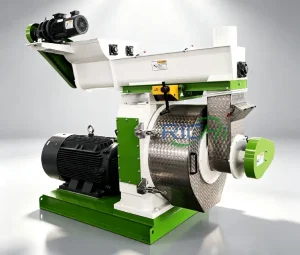
Wood drying is one of the most important processes in biomass processing and wood pellet production. Sawdust, wood chips, wood shavings, bark, and other wood residues often contain a significant amount of moisture when they are collected or delivered to a processing plant. If this moisture is not properly controlled, downstream equipment may consume more energy and operate less efficiently.
At first glance, drying seems like an energy-intensive process because heat is required to evaporate water. However, a well-designed drying system can actually help reduce the total energy consumption of a wood processing or pellet production plant.
The key is to remove only the necessary amount of moisture, use heat efficiently, maintain stable material flow, and prevent energy losses during drying and subsequent processing.
A properly selected wood sawdust dryer can therefore play an important role in improving overall plant efficiency. It can stabilize sawdust moisture before pelletizing, reduce unnecessary energy consumption in pellet mills, improve production consistency, and allow better utilization of available heat sources.
This article explains how wood drying affects energy consumption, what factors determine drying efficiency, and how industrial wood drying systems can be optimized.
Why Does Wood Moisture Affect Energy Consumption?
Water requires a large amount of thermal energy to evaporate.
When wet sawdust enters a processing plant, part of its weight consists of water rather than usable dry wood material. The wetter the raw material, the more energy is required to remove that water.
For example, consider two batches of sawdust:
- Batch A contains 25% moisture.
- Batch B contains 50% moisture.
If both batches contain the same amount of dry wood, Batch B contains considerably more water that must be removed before pelletizing.
This means that a dryer must be sized according to the actual moisture evaporation requirement rather than simply the desired production capacity.
Moisture also affects downstream equipment. If sawdust is too wet, the pellet mill may require more mechanical energy to process the material, while pellet formation may become unstable.
Therefore, controlling moisture at the drying stage can help improve energy efficiency throughout the entire production process.
How Wood Drying Can Reduce Overall Energy Consumption
Wood drying itself requires energy, but controlled drying can reduce total energy consumption in several ways.
The main mechanisms include:
- Removing excess water before energy-intensive processing
- Reducing unnecessary pellet mill load
- Improving pelletizing stability
- Reducing material recirculation
- Improving heat utilization
- Preventing over-drying
- Improving heat-source efficiency
- Reducing heat loss
- Stabilizing production
- Supporting efficient use of biomass fuels
The most important principle is that energy efficiency depends on the entire process, not only the dryer.
1. Removing Excess Water Before Pelletizing
The most direct benefit of drying is removing water before the raw material enters the pellet mill.
Wood pellet mills are designed to compress dry biomass into dense pellets. When the material contains excessive moisture, part of the energy supplied to the system is effectively dealing with water rather than forming pellets.
Wet sawdust may also cause:
- Unstable feeding
- Reduced pellet production
- Poor pellet formation
- Increased fines
- Die blockage
- Material sticking
- Higher mechanical load
By bringing sawdust to an appropriate moisture level before pelletizing, the pellet mill can operate under more stable conditions.
This does not mean that the driest possible material is always the best choice. Excessively dry sawdust can also negatively affect pellet formation.
The goal is to achieve the appropriate moisture level for the specific raw material and pelletizing system.
2. Reducing Pellet Mill Energy Consumption
Pelletizing is a mechanical compression process.
A pellet mill uses significant electrical power to compress and force biomass through a die. The condition of the feed material directly affects how efficiently this energy is converted into pellets.
If sawdust contains too much water, the pellet mill may experience increased resistance or unstable compression conditions.
A properly controlled drying process helps provide a more suitable feedstock.
For example, a wood pellet plant may process:
Raw Sawdust → Drying → Pelletizing → Cooling → Screening → Packing
The drying stage prepares the material so that the pellet mill can work under more consistent conditions.
This can reduce unnecessary load variations and help maintain stable electrical consumption per ton of finished pellets.
3. Improving Pelletizing Stability
Energy efficiency is not only about electricity consumption.
Production interruptions also waste energy.
If wet sawdust causes a pellet mill to stop, restart, or operate at reduced capacity, the plant may consume electricity without producing the expected amount of finished product.
A stable moisture level helps reduce these fluctuations.
A consistent feedstock can contribute to:
- More stable pellet mill operation
- More consistent production
- Fewer blockages
- Lower material losses
- Reduced downtime
- Better utilization of installed equipment
As a result, the energy consumed by the plant can be distributed across a more stable volume of production.
4. Avoiding Over-Drying
One of the most common energy-efficiency mistakes is drying the material more than necessary.
Drying requires heat. If sawdust needs to reach 12% moisture but the dryer continuously reduces it to 5%, additional energy has been used without necessarily creating additional value.
Over-drying may also affect pelletizing performance.
Therefore, the correct target is not:
“As dry as possible.”
Instead, it should be:
“Dry enough for the next process.”
For wood pellet production, a moisture level around 10–15% is often used as a general reference, but the optimum value depends on the wood species, particle size, pellet mill, die compression ratio, and other process conditions.
Proper moisture control can therefore save energy by preventing unnecessary evaporation.
5. Why Initial Moisture Matters
The energy required for drying depends strongly on the initial moisture content.
Suppose a plant processes 10 tons of wet sawdust per hour.
If the raw material contains 30% moisture, it contains approximately:
- 3 tons/hour of water
- 7 tons/hour of dry solids
If the same 10 tons/hour of material contains 50% moisture, it contains:
- 5 tons/hour of water
- 5 tons/hour of dry solids
The second situation requires substantially more water removal.
This demonstrates why a drying system should be designed around actual moisture conditions.
Before purchasing a dryer, a plant operator should determine:
- Wet feed capacity
- Initial moisture
- Target moisture
- Dry solids content
- Required water evaporation
- Operating hours
- Seasonal moisture variation
This information helps engineers select a suitable dryer and heat source.
6. Improving Thermal Efficiency
A large portion of dryer energy consumption comes from the heat required to evaporate water.
Thermal efficiency can be improved by ensuring that the available heat is transferred to the material effectively.
Important factors include:
- Hot-air temperature
- Airflow
- Material distribution
- Residence time
- Drum design
- Internal lifting flights
- Insulation
- Exhaust management
- Heat-source efficiency
If hot air passes through the dryer without making sufficient contact with wet material, much of the available heat may leave through the exhaust.
A properly designed industrial dryer increases contact between hot air and biomass, improving heat transfer.
7. How a Wood Sawdust Dryer Improves Heat Transfer
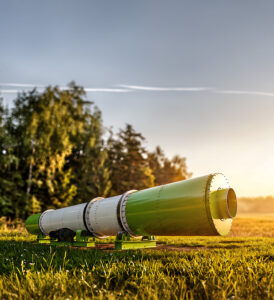
A modern wood sawdust dryer can be designed to continuously mix and lift sawdust during drying.
In a rotary drying system, the material enters a rotating drum.
Internal lifting flights pick up the sawdust and allow it to fall through the hot-air stream.
This creates repeated contact between:
Hot Air + Sawdust
As the sawdust moves through the drum:
- Heat transfers from the air to the particles.
- Moisture inside the particles moves toward the surface.
- Surface moisture evaporates.
- Water vapor enters the hot air.
- Humid air leaves through the exhaust system.
- The material continues toward the discharge end.
Efficient material dispersion helps maximize heat transfer and reduce unnecessary residence time.
(Related machine: https://pelletisingmachine.com/sawdust-dryer-machine/)
8. Using the Right Airflow
Airflow is another major factor in energy efficiency.
Hot air performs two functions:
- It supplies heat.
- It carries away evaporated moisture.
If airflow is too low, humid air can remain around the material, slowing evaporation.
If airflow is too high, fan electricity consumption may increase and additional heat may be lost through the exhaust.
The best operating condition is therefore a balanced airflow.
A properly designed exhaust fan and dust collection system can help maintain the required airflow while removing humid air from the dryer.
9. Reducing Heat Loss Through Insulation
Heat loss is a major source of inefficiency in industrial drying.
If the dryer shell, hot-air ducts, furnace, or other high-temperature components are poorly insulated, heat can escape into the surrounding environment.
This means the heat source must consume more fuel to maintain the desired drying temperature.
Good insulation can help:
- Reduce external heat loss
- Maintain stable dryer temperature
- Reduce fuel consumption
- Improve operator safety
- Increase overall thermal efficiency
Insulation should therefore be considered when designing or upgrading a biomass drying system.
10. Choosing an Efficient Heat Source
The heat source has a major influence on operating cost.
Wood drying systems may use:
- Biomass
- Natural gas
- Diesel
- Coal where legally permitted
- Steam
- Hot water
- Other industrial heat sources
For wood pellet plants, biomass residues may sometimes be used as fuel for the drying system.
For example, low-value wood residues that are unsuitable for pellet production may potentially be used as a heat source if the combustion system is properly designed.
This creates an opportunity to reduce dependence on purchased fuels.
However, fuel selection should consider:
- Fuel moisture
- Heating value
- Availability
- Combustion efficiency
- Emission requirements
- Maintenance
- Local regulations
- Safety
11. Using Waste Heat
Waste heat recovery can significantly improve the overall energy efficiency of a wood processing plant.
Potential heat sources include:
- Exhaust gas
- Biomass combustion systems
- Industrial boilers
- CHP systems
- Other thermal equipment
Instead of allowing usable heat to escape directly into the atmosphere, a properly engineered system can recover part of that energy and use it for drying.
For example:
Heat Source → Hot Air → Dryer → Moist Exhaust
A heat recovery system may capture part of the energy from the exhaust stream and reuse it where technically appropriate.
The exact configuration depends on the plant design and the characteristics of the exhaust gas.
12. Reducing Energy Loss During Material Handling
Drying efficiency can be reduced if dried sawdust absorbs moisture again after leaving the dryer.
This is particularly important in humid climates.
Imagine that sawdust leaves the dryer at the desired moisture level but is then transported through an open, humid environment and stored without proper protection.
The material may absorb moisture again.
The plant then has to use additional energy to remove the same moisture later.
To prevent this, dried material should be:
- Transported efficiently
- Protected from rain
- Stored in suitable conditions
- Kept away from unnecessary moisture exposure
- Processed promptly where practical
Moisture control should therefore continue after the dryer.
13. Stable Feeding Improves Energy Efficiency
An industrial dryer performs best when the material feed is stable.
If the feed rate suddenly increases, the dryer may not provide enough heat for complete drying.
If the feed rate suddenly decreases, the system may continue consuming a similar amount of energy while processing less material.
This reduces energy efficiency per ton.
Controlled feeding equipment can help maintain:
- Stable feed rate
- Consistent residence time
- Stable moisture removal
- Better heat utilization
- More predictable energy consumption
For large pellet production plants, automated feeding can be particularly useful.
14. Particle Size and Drying Efficiency
Particle size affects how quickly moisture can escape from biomass.
Fine sawdust generally has a larger surface area relative to its mass, allowing moisture to evaporate quickly.
Larger wood chips have longer moisture migration paths and may require more residence time.
However, extremely fine particles can create other challenges, including:
- Higher dust loading
- Increased pressure drop
- Material carryover
- Fire and explosion risks
- Higher dust collection requirements
Therefore, particle size should be optimized according to both drying and downstream processing requirements.
15. Residence Time and Energy Consumption
Residence time is the period during which biomass remains inside the dryer.
If residence time is too short, the material may leave with excessive moisture.
If it is too long, energy may be wasted.
The optimum residence time depends on:
- Initial moisture
- Final moisture
- Particle size
- Hot-air temperature
- Airflow
- Dryer diameter
- Dryer length
- Drum speed
- Material feed rate
A properly designed rotary dryer uses these variables together to provide effective moisture removal without unnecessary energy consumption.
16. Moisture Monitoring Can Save Energy
Moisture measurement is one of the simplest ways to improve drying efficiency.
Without moisture monitoring, operators may rely on assumptions or visual inspection.
However, appearance is not always a reliable indicator of moisture.
A dryer may therefore be operated conservatively, using more heat than necessary.
Moisture testing allows operators to determine whether:
- Initial moisture has changed
- The dryer is under-drying
- The dryer is over-drying
- The target moisture is being maintained
For larger systems, online moisture monitoring can provide continuous information for process control.
17. Automation Helps Optimize Energy Consumption
An automated dryer control system can monitor and adjust several operating parameters.
Typical control points include:
- Dryer temperature
- Exhaust temperature
- Fan speed
- Feed rate
- Drum speed
- Heat-source operation
- Material flow
- Safety alarms
If the incoming sawdust becomes wetter, the system may need more heat or longer residence time.
If the raw material becomes drier, excessive heat may no longer be necessary.
Automation allows the system to respond to these changes more efficiently than a fixed manual setting.
18. Maintenance and Energy Efficiency
A poorly maintained dryer can consume more energy.
Common maintenance issues include:
- Worn bearings
- Damaged lifting flights
- Blocked ducts
- Dirty dust collectors
- Fan problems
- Air leakage
- Damaged insulation
- Unstable feeders
- Sensor failure
For example, air leakage around ducts can reduce the amount of hot air reaching the dryer.
A partially blocked dust collector can increase pressure drop and fan energy consumption.
Regular maintenance can therefore help preserve both thermal and electrical efficiency.
19. Energy Efficiency in a Complete Wood Pellet Plant
Drying should not be evaluated independently from the rest of the pellet plant.
A complete wood pellet production line may include:
Raw Material Receiving → Cleaning → Chipping → Crushing → Grinding → Drying → Pelletizing → Cooling → Screening → Packing
Each stage consumes energy.
If the drying process is unstable, it can affect the pellet mill.
If the grinding system produces excessively coarse material, the dryer may need longer residence time.
If the pellet mill is operating inefficiently, the benefit of efficient drying may be reduced.
Therefore, energy optimization should consider the entire production line.
20. Example of an Energy-Efficient Drying Process
A typical efficient wood pellet process can be organized as follows:
Step 1: Raw Material Testing
Measure moisture, particle size, and material characteristics.
Step 2: Material Preparation
Chip or crush large wood pieces and remove unsuitable impurities.
Step 3: Grinding
Reduce material to a suitable particle size for drying and pelletizing.
Step 4: Controlled Feeding
Use a stable feeder to deliver consistent quantities to the dryer.
Step 5: Hot-Air Drying
Use a suitable heat source and controlled airflow to remove excess moisture.
Step 6: Moisture Monitoring
Check the moisture content of dried material.
Step 7: Pelletizing
Feed the properly conditioned sawdust into the pellet mill.
Step 8: Cooling
Cool newly produced pellets to stabilize their physical condition.
Step 9: Screening
Separate fines and return suitable material to the process where appropriate.
Step 10: Packing
Pack finished pellets for storage or transportation.
This integrated approach helps avoid unnecessary energy consumption at each stage.
How to Select a Wood Sawdust Dryer for Energy Efficiency
When selecting a dryer, consider more than its advertised capacity.
Ask the supplier about:
- Initial moisture range
- Final moisture range
- Water evaporation capacity
- Heat consumption
- Electrical consumption
- Recommended heat source
- Dryer dimensions
- Residence time
- Exhaust system
- Dust collection
- Automation
- Maintenance requirements
- Seasonal operating conditions
A good dryer should be matched to the actual project rather than selected solely by nominal tons per hour.
What Is the Most Important Factor in Reducing Drying Energy?
There is no single factor that determines energy consumption.
The most important variables usually include:
Initial Moisture + Target Moisture + Water Evaporation + Heat Efficiency + Airflow + Residence Time + Feed Stability
If these variables are properly coordinated, the drying process can operate efficiently.
If one variable is significantly out of balance, energy consumption can increase.
For example, a highly efficient heat source cannot compensate for severe heat loss through poorly insulated ducts.
Similarly, excellent insulation cannot compensate for unstable feeding or excessive over-drying.
Energy efficiency is therefore a system-level issue.
Common Mistakes That Increase Wood Drying Energy Consumption
Drying to an Unnecessarily Low Moisture
The dryer uses additional heat to remove moisture that does not need to be removed.
Using an Oversized Dryer
An oversized dryer may require unnecessary investment and may not operate efficiently at low loads.
Ignoring Seasonal Moisture Changes
Raw material moisture can vary significantly throughout the year.
Poor Heat Distribution
Some material may be over-dried while other material remains wet.
Excessive Exhaust Airflow
Very high airflow can increase fan power and carry additional heat out of the system.
Poor Insulation
Heat escapes before it can be transferred to the material.
Unstable Material Feeding
Uneven feed rates reduce dryer utilization.
Poor Dust Collection Maintenance
Blocked filters or cyclones can increase pressure losses and fan energy consumption.
Frequently Asked Questions
Does drying wood save energy?
Yes. Although drying requires thermal energy, proper moisture control can reduce energy consumption in downstream processes, particularly pelletizing. Efficient drying also helps prevent over-processing and improves production stability.
Is drying wet sawdust energy-intensive?
Yes, especially when initial moisture is high. The wetter the sawdust, the more water must be evaporated. Accurate moisture measurement is therefore important when designing a drying system.
What moisture should sawdust have before pelletizing?
A common reference range is approximately 10–15%, but the optimum value depends on the raw material and pelletizing conditions.
What is a wood sawdust dryer?
A wood sawdust dryer is industrial equipment used to reduce the moisture content of sawdust using controlled heat and airflow. Rotary drum dryers are commonly used for continuous biomass drying.
Can a biomass dryer use sawdust as fuel?
In some projects, suitable biomass residues can be used as fuel for the drying heat source. The combustion system must be appropriately designed and comply with applicable safety and environmental requirements.
How can I reduce fuel consumption in a sawdust dryer?
Maintain stable feeding, avoid over-drying, optimize airflow, reduce heat loss, use an efficient heat source, maintain the exhaust system, and monitor moisture continuously or regularly.
Does dryer size affect energy efficiency?
Yes. A dryer should be appropriately sized according to wet feed capacity, initial moisture, target moisture, and water evaporation requirements. An incorrectly sized dryer may operate inefficiently.
Can waste heat be used for wood drying?
Potentially, yes. Depending on the source and exhaust characteristics, waste heat can sometimes be recovered and reused for drying.
Why is moisture uniformity important?
Uniform moisture helps the downstream pellet mill operate consistently. If some material is too wet while other material is too dry, production efficiency and pellet quality may become unstable.
(More at: RICHI Machinery )
Conclusion
Wood drying may appear to be an energy-consuming process, but properly designed drying can actually improve the overall energy efficiency of a biomass processing or wood pellet production plant.
The key is to control moisture accurately rather than simply applying more heat.
By removing excess water before pelletizing, reducing unnecessary mechanical load, improving heat transfer, optimizing airflow, using efficient heat sources, recovering usable heat, reducing heat loss, and preventing over-drying, a plant can reduce unnecessary energy consumption while maintaining stable production.
A properly selected wood sawdust dryer is an important part of this process. Rotary drying systems can provide continuous material movement, good hot-air contact, controlled residence time, and integration with complete biomass processing lines.
However, dryer performance depends on more than the machine itself. Initial moisture, target moisture, particle size, feed rate, heat source, airflow, residence time, insulation, dust collection, and automation all affect energy consumption.
For a complete wood pellet production project, the most effective approach is to design the drying system together with grinding, pelletizing, cooling, screening, conveying, dust collection, and packing equipment.
With a properly engineered system, wood drying can do more than remove moisture. It can help create a more stable, efficient, and economically sustainable biomass processing operation.