Introduction
Aquaculture has become one of the most important agricultural industries worldwide. With the increasing demand for seafood and the growing pressure on natural fish resources, sustainable fish farming has become essential for global food security. However, the expansion of aquaculture also brings challenges, including resource consumption, water pollution, feed waste, and the need for efficient production methods.
Among all factors influencing aquaculture sustainability, feed production plays a critical role. Feed is the main input in intensive fish farming, and its quality directly affects growth performance, resource efficiency, environmental impact, and production costs. High-quality aquatic feed enables farmers to produce more aquatic products with fewer resources while reducing waste and maintaining healthier farming environments.
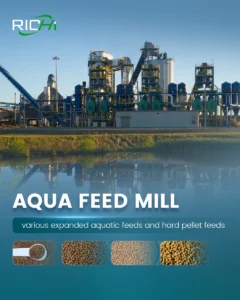
A modern aquatic feed mill provides advanced solutions for producing nutritious, efficient, and environmentally responsible feed products. By applying scientific formulation, precision processing, automation technology, and sustainable ingredient management, aquatic feed production helps farmers improve feed utilization, reduce environmental pressure, and achieve more sustainable farming practices.
This article explores how aquatic feed production supports sustainable farming and explains why efficient feed manufacturing has become a key component of the future aquaculture industry.
1. The Importance of Sustainability in Modern Aquaculture
Aquaculture has grown rapidly because it provides an efficient way to produce animal protein. However, traditional intensive farming systems may face several environmental challenges, such as:
- Excess nutrient discharge
- Poor water quality
- High feed consumption
- Resource waste
- Increased production costs
Sustainable aquaculture aims to balance economic development with environmental protection. The goal is to produce more aquatic products while using fewer resources and minimizing negative impacts.
Feed production is closely connected with sustainability because feed efficiency determines how effectively resources are converted into fish biomass. When fish can utilize feed nutrients efficiently, farmers can reduce input requirements and improve overall production performance.
A well-designed aquatic feed mill helps achieve this goal by producing high-quality feeds that maximize nutrient utilization and minimize waste throughout the farming cycle.
2. Improving Feed Conversion Efficiency and Reducing Resource Consumption
Feed conversion ratio (FCR) is one of the most important indicators of aquaculture efficiency. It measures how much feed is required to produce a certain amount of fish weight.
A lower FCR means:
- Less feed is needed
- Production costs are reduced
- Resources are used more efficiently
- Environmental impact is minimized
Poor-quality feed often results in:
- Slow growth
- Excessive feeding
- Increased organic waste
- Higher farming costs
Modern aquatic feed production improves feed efficiency through:
Balanced Nutrition
Scientific formulas provide the correct combination of:
- Protein
- Energy
- Lipids
- Vitamins
- Minerals
This ensures fish receive the nutrients required for healthy growth.
Better Digestibility
Advanced processing technologies improve nutrient availability, allowing fish to absorb more nutrients from each pellet.
Precise Formulation
Computer-controlled formulation systems ensure accurate ingredient proportions, reducing unnecessary nutrient waste.
Through these improvements, aquatic feed production helps farmers achieve higher yields while consuming fewer resources.
3. Reducing Water Pollution Through High-Quality Feed
Water quality management is one of the biggest challenges in intensive aquaculture. Excess feed and undigested nutrients can accumulate in water, causing:
- Increased ammonia levels
- Oxygen reduction
- Algae growth
- Disease risks
High-quality aquatic feed helps reduce these environmental problems.
Better Nutrient Absorption
When fish digest feed efficiently, fewer nutrients are released into the water.
Improved Pellet Stability
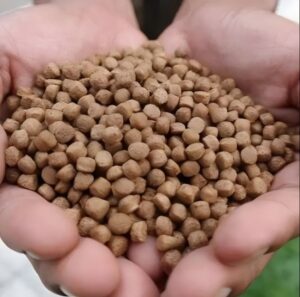
Aquatic feed pellets must remain stable after entering water. High-quality pellets prevent rapid disintegration and reduce nutrient leakage.
Controlled Feeding
Floating and sinking feed technologies allow farmers to manage feeding more accurately.
For example, floating feed allows farmers to observe fish feeding behavior and adjust feed quantities, reducing overfeeding.
By minimizing feed waste, aquatic feed production contributes to cleaner water systems and healthier aquatic ecosystems.
4. Supporting Sustainable Use of Raw Materials
The ingredients used in aquatic feed production have a major influence on sustainability.
Traditional aquatic feeds often rely heavily on marine protein sources such as fish meal and fish oil. Although these ingredients provide excellent nutrition, excessive dependence on marine resources can create environmental concerns.
Modern feed manufacturers are developing more sustainable ingredient strategies, including:
- Plant-based proteins
- Alternative protein sources
- Agricultural by-products
- Algae-based ingredients
- Insect protein
A professional aquatic feed mill can adjust feed formulas according to available sustainable ingredients while maintaining nutritional performance.
This helps:
- Reduce pressure on wild fish resources
- Improve resource efficiency
- Lower environmental impact
Sustainable ingredient selection is becoming an important direction for the future development of aquatic feed manufacturing.
https://richipelletizer.com/aqua-feed-plant
5. Improving Energy Efficiency Through Advanced Production Technology
Sustainable farming is not only about feed ingredients but also about how feed is produced.
Traditional manufacturing processes may consume large amounts of energy. Modern aquatic feed production facilities use advanced technologies to improve energy efficiency.
Energy-saving improvements include:
Efficient Motors
High-efficiency motors reduce electricity consumption during grinding, mixing, extrusion, and transportation.
Automated Production Control
Automation systems optimize equipment operation and prevent unnecessary energy use.
Improved Processing Design
Modern production lines reduce material loss and improve production efficiency.
A technologically advanced aquatic feed mill can produce larger quantities of feed with lower energy consumption, helping manufacturers achieve more sustainable operations.
6. Supporting Healthier Fish and Reducing Chemical Use
Healthy fish populations are essential for sustainable aquaculture. Poor nutrition can weaken fish immunity and increase disease risks.
High-quality aquatic feed supports fish health by providing:
- Essential nutrients
- Balanced amino acids
- Vitamins
- Minerals
- Functional additives
Some modern feeds include functional ingredients such as:
- Probiotics
- Natural immune enhancers
- Digestive support additives
Healthier fish require fewer treatments, reducing dependence on chemicals and improving environmental safety.
By supporting stronger immunity and better growth, aquatic feed production contributes to more responsible farming systems.
7. The Role of Extrusion Technology in Sustainable Aquatic Feed Production
Extrusion technology is one of the most important innovations in modern aquatic feed manufacturing.
During extrusion, feed materials are processed under controlled conditions of:
- Temperature
- Pressure
- Moisture
- Mechanical force
This process improves:
Nutrient Availability
Extrusion breaks down raw materials and improves digestibility.
Feed Stability
Extruded pellets maintain their structure in water, reducing nutrient losses.
Feeding Efficiency
Floating and sinking characteristics can be controlled according to farming requirements.
The ability to produce specialized feed products allows farmers to reduce waste and improve resource utilization.
For example:
- Floating feed helps surface-feeding fish consume feed efficiently.
- Sinking feed supports bottom-feeding species.
- Slow-sinking feed provides controlled feeding opportunities.
These technologies make aquaculture production more efficient and environmentally friendly.
(Related machine: efficient wet type fish feed extruder )
8. Automation Improves Sustainable Feed Manufacturing
Automation has become increasingly important in modern aquatic feed production.
An automated aquatic feed production system can manage:
- Ingredient weighing
- Formula control
- Production monitoring
- Equipment operation
- Quality inspection
Automation supports sustainability by:
Reducing Material Waste
Precise ingredient control prevents unnecessary losses.
Improving Product Consistency
Stable production conditions ensure reliable feed quality.
Reducing Labor Requirements
Automated systems improve operational efficiency.
Optimizing Energy Use
Intelligent control systems adjust equipment performance according to production needs.
These advantages allow feed manufacturers to produce high-quality products while reducing environmental impact.
9. Customized Feed Solutions Improve Farming Efficiency
Different aquatic species and farming systems have different nutritional requirements. Customized feed solutions allow farmers to achieve better production results.
A modern aquatic feed manufacturer can develop formulas based on:
- Fish species
- Growth stage
- Farming environment
- Production goals
Examples include:
Tilapia Feed
Designed for efficient growth and cost-effective production.
Shrimp Feed
Focused on water stability and nutrient availability.
Marine Fish Feed
Designed with higher-quality protein and specific nutritional requirements.
Customized feed improves:
- Growth performance
- Feed utilization
- Farming profitability
At the same time, it reduces unnecessary nutrient input and supports sustainable farming practices.
10. Reducing Overall Environmental Footprint
Sustainable aquatic farming requires consideration of the entire production chain.
Efficient aquatic feed production reduces environmental impact through:
Lower Resource Consumption
Better feed conversion means fewer raw materials are required.
Reduced Waste Generation
Improved digestibility lowers nutrient discharge.
Sustainable Ingredient Selection
Alternative ingredients reduce pressure on natural resources.
Efficient Manufacturing
Modern equipment reduces energy consumption.
Together, these improvements help create a more environmentally responsible aquaculture industry.
11. Economic Benefits of Sustainable Aquatic Feed Production
Sustainability is not only an environmental goal but also an economic advantage.
Efficient aquatic feed production helps farmers and manufacturers achieve:
Lower Production Costs
Better feed utilization reduces feed expenses.
Higher Productivity
Healthy fish grow faster and have better survival rates.
Improved Market Competitiveness
High-quality feed products create stronger customer relationships.
Long-Term Business Growth
Sustainable production methods support stable development.
For feed manufacturers, investing in advanced technology creates opportunities to serve the growing demand for environmentally responsible aquaculture solutions.
12. Future Trends in Sustainable Aquatic Feed Production
The future of aquatic feed production will focus increasingly on innovation and sustainability.
Important trends include:
Alternative Protein Development
More sustainable protein sources will replace traditional ingredients.
Precision Feeding
Advanced data systems will help farmers provide exactly the right amount of feed.
Smart Manufacturing
Artificial intelligence and automation will improve production efficiency.
Circular Economy Approaches
Agricultural by-products and food processing residues may become valuable feed ingredients.
Functional Nutrition
Feeds will increasingly focus on improving fish health and reducing disease risks.
These developments will continue strengthening the role of aquatic feed production in sustainable farming.
Conclusion
Aquatic feed production plays a fundamental role in supporting sustainable aquaculture. By improving feed efficiency, reducing waste, optimizing resource use, and promoting healthier fish growth, high-quality feed helps farmers achieve better production results while protecting the environment.
A modern aquatic feed mill combines advanced processing technology, scientific nutrition, automation systems, and sustainable ingredient strategies to produce efficient and environmentally responsible feed products. From reducing water pollution to improving resource utilization, aquatic feed manufacturing provides essential support for the future development of sustainable fish farming.
As global demand for aquatic products continues to rise, sustainable feed production will become increasingly important. By investing in advanced technologies and responsible manufacturing practices, the aquaculture industry can achieve long-term growth while maintaining a balance between productivity, profitability, and environmental protection.
(view our website: RICHI Machinery )