The poultry farming industry is constantly evolving. With increasing demand for high-quality meat and eggs, farmers are facing greater pressure to improve productivity while controlling operating costs. Among all production factors, feed management remains one of the most important elements influencing farm profitability.
Feed represents a significant percentage of poultry production expenses. The quality, consistency, and availability of feed directly affect animal growth, health, and overall performance. Therefore, many poultry businesses are exploring better ways to produce their own feed instead of depending completely on external suppliers.
A modern feed pellet production line provides an efficient method for converting agricultural materials into nutritious and easy-to-manage feed products. Through advanced processing technology, businesses can improve feed quality, reduce waste, and establish a more stable supply system.
Why Feed Management Determines Poultry Success
Successful poultry farming requires careful control of many factors, including breeding conditions, disease prevention, environmental management, and nutrition.
Among these factors, nutrition has a direct impact on:
- Growth speed
- Feed conversion ratio
- Egg production
- Animal health
- Production costs
Poor-quality feed can reduce farm performance even when other conditions are well managed.
For this reason, professional feed production has become increasingly important. By controlling ingredients and processing methods, farmers can create feed formulas that better match the nutritional requirements of their animals.
The Advantages of Producing Feed on Your Own
Many poultry farms initially purchase finished feed from commercial suppliers. While this approach may work for small operations, larger farms often face several challenges.
Rising Feed Costs
Feed prices are affected by grain markets, transportation costs, and seasonal supply changes. External purchasing makes farms more vulnerable to market fluctuations.
Limited Formula Control
Commercial feed products may not always match specific farming conditions. Different regions, breeds, and production goals require different nutritional strategies.
Supply Stability Issues
During periods of market shortage, obtaining sufficient feed supply can become difficult.
Building an internal production system helps businesses solve these problems.
The main advantages include:
- Better cost management
- Flexible formulas
- Stable supply
- Improved production planning
- Reduced dependence on external suppliers
Selecting the Suitable Production Capacity
Choosing the correct factory size is essential for investment success. A production system should match current demand while allowing room for future development.
Before selecting equipment, investors should evaluate:
- Number of poultry being raised
- Expected feed consumption
- Local market opportunities
- Available raw materials
- Expansion plans
For small and medium commercial farms, a 3-4 T/H chicken feed manufacturing plant for sale can provide an efficient balance between investment and output.
This type of system is suitable for businesses that require reliable daily feed production without excessive construction and equipment costs.
Larger operations may choose higher-capacity solutions depending on their market goals.
How Modern Feed Processing Improves Product Quality
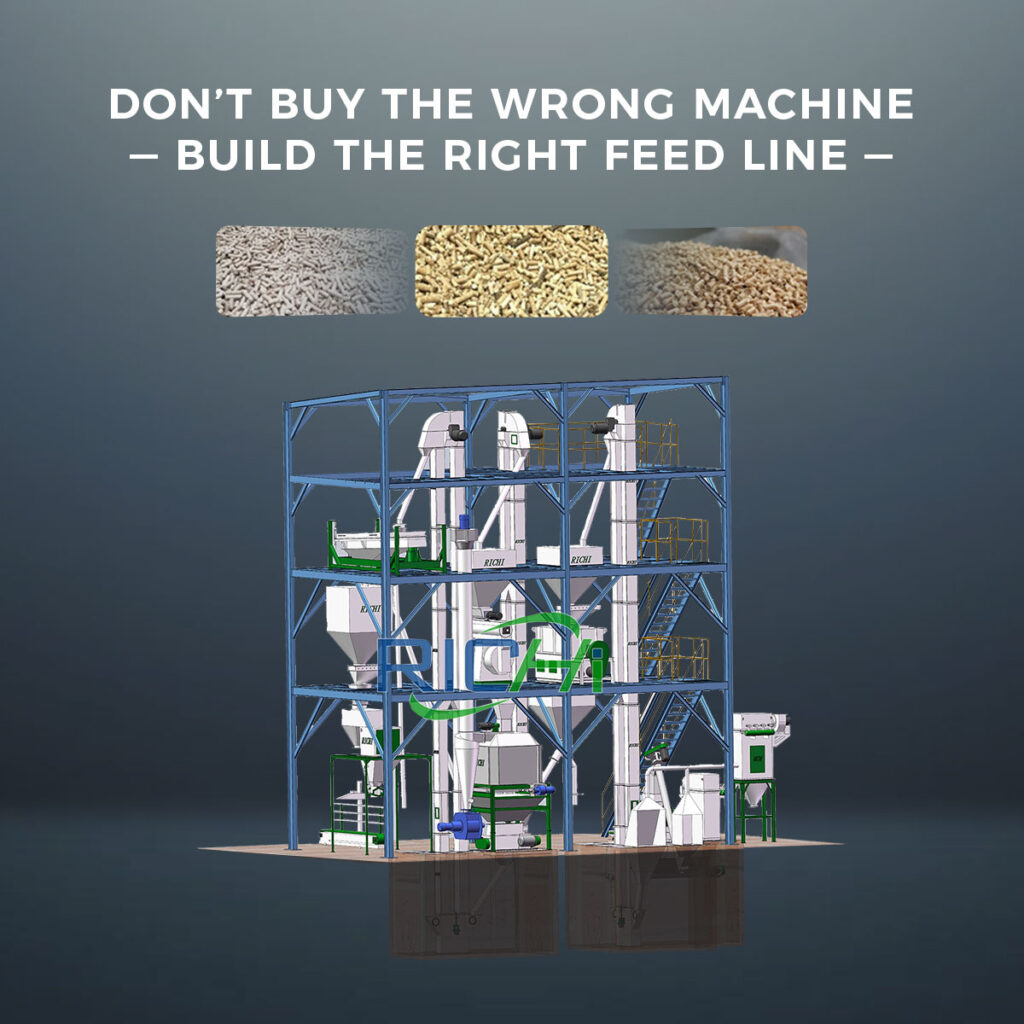
A professional feed production system includes multiple processing stages, and each stage contributes to final feed performance.
Raw Material Preparation
Feed production begins with selecting and preparing raw materials.
Common ingredients include:
- Corn
- Wheat
- Soybean meal
- Rice bran
- Protein supplements
- Minerals
- Vitamins
The quality of raw materials affects the nutritional value of the final product.
Proper storage and handling prevent moisture damage and contamination.
Grinding Technology
Grinding reduces raw materials into suitable particle sizes.
Correct particle size improves:
- Mixing efficiency
- Pellet formation
- Nutrient availability
- Animal digestion
Different animals may require different feed structures, so grinding settings should be adjusted according to production requirements.
Mixing Accuracy
Uniform mixing ensures that every pellet contains balanced nutrients.
Modern mixing systems improve accuracy by controlling ingredient ratios and reducing manual errors.
This is especially important for commercial poultry farms where consistent feed quality is necessary for stable production results.
Pellet Production Process
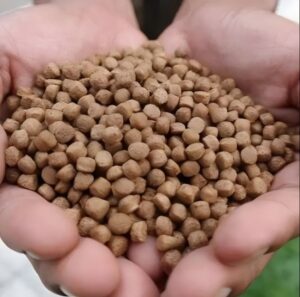
The pelletizing stage transforms mixed ingredients into compact feed particles.
Compared with loose powder feed, pellets provide several advantages:
- Less feed loss
- Easier transportation
- Better storage
- Improved feeding efficiency
A complete pellet plant integrates pellet production with cooling, screening, and packaging systems to create an efficient workflow.
Cooling, Screening, and Packaging: Completing the Feed Production Process
After pellet formation, newly produced pellets usually have higher temperatures and moisture levels. Cooling is necessary to improve pellet stability and prepare products for storage.
The cooling process helps:
- Reduce pellet temperature
- Improve hardness
- Remove excess moisture
- Extend storage life
After cooling, screening equipment separates qualified pellets from broken particles and powder. Unqualified materials can often be returned to the production process, reducing waste and improving material utilization.
The final packaging stage protects feed quality during transportation and storage. Efficient packaging systems also help businesses improve logistics management and reduce manual labor requirements.
A complete production workflow ensures that every batch of feed maintains stable quality from raw materials to finished products.
The Role of Automation in Modern Poultry Feed Production
Technology has changed the way feed factories operate. Traditional production methods often require significant manual labor, which may lead to inconsistent quality and lower efficiency.
Modern automated systems provide better control over the entire manufacturing process.
Important automation functions include:
Automatic Ingredient Measurement
Accurate ingredient measurement is essential for maintaining nutritional balance. Automated weighing systems ensure that each formula follows the required specifications.
Centralized Control Systems
Operators can monitor production processes through centralized control panels. This improves efficiency and allows quick adjustments when problems occur.
Production Data Management
Digital systems collect important production information, helping managers analyze performance and optimize factory operation.
For commercial poultry businesses, automation is not only about reducing labor requirements. It also helps improve product consistency and long-term profitability.
Improving Farm Profitability Through Better Feed Strategies
Many poultry producers focus mainly on increasing farm size, but improving feed efficiency can often create greater economic benefits.
Better feed strategies help businesses achieve:
Lower Production Costs
By controlling raw materials and production processes, farms can reduce dependence on expensive commercial feed.
Improved Feed Conversion
High-quality pellets are easier for animals to consume and digest, which may improve feed utilization.
Better Production Stability
A reliable feed supply allows farms to maintain continuous production without unexpected shortages.
More Flexible Business Planning
Independent feed production gives businesses greater freedom to adjust formulas and respond to market changes.
These advantages make feed manufacturing an important part of modern poultry development.
Common Considerations Before Building a Feed Factory
Investing in a feed factory requires careful preparation. Many project failures occur because investors underestimate planning requirements.
Several factors should be evaluated before construction.
Factory Location
The factory location should consider:
- Raw material availability
- Transportation conditions
- Market accessibility
- Energy supply
A suitable location can reduce operating costs and improve logistics efficiency.
Production Layout
A reasonable factory layout ensures smooth material movement and reduces unnecessary transportation inside the facility.
Equipment Selection
Different feed businesses require different equipment configurations. Selecting machines based only on price may create operational problems in the future.
Technical Support
Installation guidance, employee training, and after-sales service are important for maintaining stable production.
Professional project planning helps investors avoid unnecessary risks.
Sustainable Development Opportunities in Feed Manufacturing
Modern agriculture is increasingly focused on sustainability. Feed factories can contribute to sustainable development by improving resource utilization.
Many agricultural materials can be transformed into valuable feed ingredients instead of becoming waste.
Examples include:
- Grain processing by-products
- Crop residues
- Oilseed processing materials
- Local agricultural resources
Efficient processing technology allows businesses to maximize available resources while reducing environmental impact.
Sustainable feed production also supports regional agricultural development by creating additional value from local resources.
Choosing the Right Partner for Feed Factory Development
Building a successful feed factory requires cooperation with experienced equipment suppliers and technical teams.
A reliable partner should provide:
- Professional project planning
- Suitable equipment recommendations
- Production process design
- Installation guidance
- Technical training
- Long-term support
Different businesses have different goals, so customized solutions are usually more effective than standard equipment packages.
When researching production technology, investors can learn more about this to understand modern feed factory planning methods, equipment selection principles, and industry development trends.
Future Trends of Poultry Feed Production
The poultry feed industry will continue developing toward higher efficiency and smarter management.
Several trends will shape future production:
Intelligent Factory Systems
More factories will adopt digital management platforms to improve monitoring and decision-making.
Greater Production Flexibility
Businesses will need systems capable of producing different feed products according to changing customer requirements.
Energy-Efficient Equipment
Reducing energy consumption will become increasingly important as production costs continue to rise.
Integration With Modern Farming
Feed production will become more closely connected with breeding, agricultural resources, and supply chain management.
These developments will create new opportunities for companies that invest in advanced production systems.
(Related Post: https://www.richipelletmill.com/animal-feed-mill-equipment-for-sale/)
Conclusion
Modern poultry farming requires efficient feed management, stable production processes, and effective cost control. A professional feed factory provides businesses with greater independence and stronger competitiveness.
By selecting suitable production capacity, improving processing technology, and adopting automation systems, poultry enterprises can achieve better efficiency and long-term development.
A well-designed feed production system is more than a collection of machines. It is a complete business solution that supports reliable feed supply, improved animal performance, and sustainable agricultural growth.
As global demand for poultry products continues to expand, modern feed manufacturing technology will remain an essential foundation for successful farming operations.