The rice harvest is over. The grain is safely stored. The straw has been baled. And then there’s the husk—millions of tons of it, scattered across rice-growing regions from Southeast Asia to the Americas. It piles up around mills, blows across roads, and clogs drainage ditches. For every ton of rice produced, roughly 200 kilograms of husk are left behind. That’s a lot of material looking for a purpose.
Most farmers treat rice husks as a nuisance. They’re bulky, lightweight, and irritating to handle. Open burning is common in many areas, sending clouds of smoke into the air and drawing complaints from neighbors. Some mills pay to have them trucked away, adding an extra cost to an already tight margin business. A handful of operations use them as bedding or mulch, but that barely makes a dent in the total volume.
But what if the husk wasn’t a problem at all? What if it was actually one of the most valuable assets on your farm? What if the solution to a longstanding nuisance was sitting right there in plain sight, waiting for someone to see it differently?
The Hidden Energy in Every Grain
Rice husks have a secret. Under that rough, fibrous exterior lies a surprising amount of stored energy. The calorific value of dried rice husks ranges from 13 to 16 megajoules per kilogram—comparable to low-grade coal and significantly higher than many other agricultural residues. In countries where fossil fuels are expensive and firewood is scarce, this energy has real economic value.
But raw rice husks are impossible to use efficiently. They’re too light to burn well in conventional furnaces—they tend to blow out of the combustion chamber before they’re fully consumed. They’re difficult to store, taking up far more space than their weight would suggest. And they’re awkward to transport, requiring special handling to keep them from scattering.
These problems have prevented most farmers from even considering husks as a fuel source. The energy is there, but it’s locked away in an inconvenient form. That’s where processing technology comes in. By compressing the husks into dense pellets, you transform them from a handling nightmare into a clean, consistent, high-value product.
A First-Hand Account
Let’s be practical for a moment. Imagine walking into a rice mill in Vietnam, as I did a few years ago. Mountains of husks filled the yard. The owner told me he was paying a local contractor $50 per truckload to haul them away. He had no idea what happened to them after they left his property. He just knew they had to go.
He also had a problem with his energy costs. The mill ran on diesel generators, and fuel prices were eating into his profits. He was looking for ways to reduce his reliance on imported fuel. The obvious solution was right in front of him, but he couldn’t see it because the husks were a nuisance, not a resource.
Later that year, he installed a small pelleting system. Now he processes his husks into pellets that power a biomass boiler. The boiler provides heat for drying the rice and electricity for the mill operations. His fuel costs dropped by nearly half. The contractor no longer comes to haul away the husks—instead, the mill has a reliable, low-cost energy source that they control completely.
The Technology That Unlocks the Value
So how does a pile of loose husks become a burnable pellet? The process is straightforward, but it demands the right equipment.
The husks first pass through a hammer mill or crusher to achieve a consistent particle size. They then enter a drying system to reduce moisture content to the ideal range of 10-12%. This drying step is critical—too much moisture and the pellets will be weak and crumbly; too little and the natural lignin won’t bind properly.
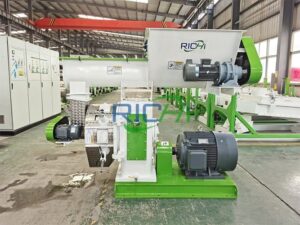
The conditioned husks then feed into the pelletizing machine. Inside the chamber, rotating rollers force the material through holes in a heavy metal die. The combination of pressure and friction generates heat, which melts the lignin naturally present in the husks. This lignin acts as a glue, binding the particles into a solid, dense pellet as they emerge from the die.
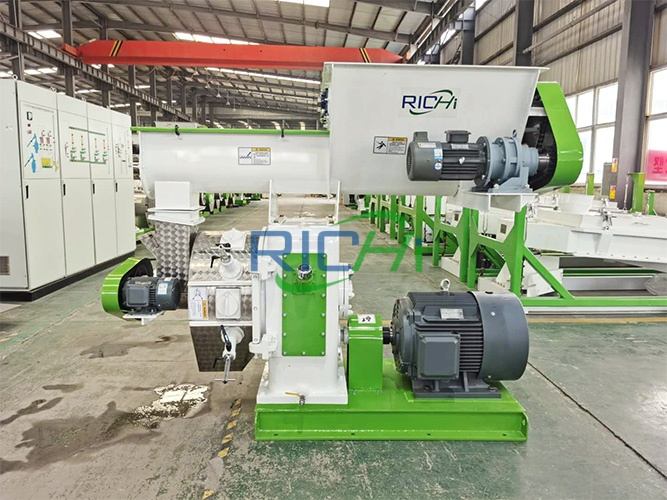
For operations that handle thousands of tons of husks annually, a rice husk pellet machine built for that scale is essential. These machines are designed with the specific challenges of rice husks in mind. The silica content in husks is highly abrasive—it wears down standard dies quickly. A proper rice husk pellet machine uses dies made from specialized alloys that resist this abrasion, extending service life and reducing maintenance costs.
The forced-feeder mechanisms on these machines are also critical. Rice husks are fluffy and tend to bridge in standard hoppers, causing the machine to starve. A properly engineered unit includes a positive-feed system that ensures consistent flow to the die, maintaining output and pellet quality even when handling difficult materials.
Scaling Up for Commercial Reality
Small-scale pelleting has its place, but the real money is made when operations scale up. The industrial market for biomass pellets is growing rapidly. Power plants, cement kilns, and manufacturing facilities are all seeking reliable sources of renewable fuel. Meeting their demand requires serious production capacity.
A large scale biomass pellet machine is a different class of equipment entirely. These are heavy-duty ring-die systems that process tons of material per hour. They integrate with automated drying, grinding, and cooling lines to create a continuous production flow. Operators can run these systems around the clock, producing consistent quality pellets that meet industrial specifications.
The economics at this scale are compelling. Rice mills that process 10,000 tons of paddy annually produce roughly 2,000 tons of husks. At current market prices for biomass pellets, that volume represents $250,000 to $400,000 in potential revenue—or, if used internally, that much in avoided energy costs. For rice millers who traditionally paid to dispose of their husks, the financial swing is even larger: revenue plus avoided disposal costs can exceed half a million dollars annually.
The Manufacturer That Understands This Challenge
Not all pellet mills are created equal. The punishing nature of rice husk processing exposes design weaknesses quickly. A machine that produces excellent pellets from wood or forage may fail within weeks when grinding husks.
The abrasion resistance of the die is the single most important factor in longevity. Husks contain up to 20% silica, which is harder than many metals used in standard pellet mills. A manufacturer that understands this uses dies made from specialized steel alloys that resist wear, often incorporating heat treatment and surface coatings to extend service life.
The Richi manufacture line of pellet mills has gained a strong reputation in rice-processing regions for their attention to these details. Their husk-specific machines incorporate reinforced die materials, oversized bearings that handle the heavy loads of compression, and advanced cooling systems that prevent overheating during continuous operation.
Beyond the hardware, the knowledge they bring is equally valuable. Rice husks are not a homogeneous material—they vary by variety, growing region, and milling process. The Richi manufacture approach includes analyzing your specific husk characteristics and tuning the system to match. This level of customization is essential for achieving consistent output and minimizing operating costs.
Beyond Fuel: Fertilizer and Construction Uses
Fuel pellets represent the largest market for processed husks, but they’re not the only option. Rice husk ash, which remains after combustion, has its own value. It’s rich in silica and is used in concrete production to improve strength and durability. Some manufacturers sell ash to construction companies, creating a second revenue stream from the same material.
Rice husk pellets also serve as a component in organic fertilizers. The fibrous structure provides bulk and water-holding capacity, while the potassium and trace minerals contribute to plant nutrition. Blended with other organic materials, they create a slow-release fertilizer that improves soil structure and fertility.
There is even a growing demand for rice husk pellets in the pet and animal bedding market. The absorbent nature of the material makes it suitable for horse stalls, poultry houses, and small animal bedding. This segment pays a premium for clean, dust-free pellets that meet quality standards.
Read more: https://pelletizerextruder.com/rice-husk-pellet-making-machine/
The Economics of Transition
Making the decision to process rice husks requires looking at the numbers honestly. The equipment cost is substantial. A complete line with drying, grinding, pelleting, and cooling can range from $50,000 for a small operation to over $500,000 for industrial capacity.
But the savings and revenue are real. For a mill processing 10,000 tons of rice annually, the husks are free—they’re already being generated. The alternative is paying for disposal. Even at low disposal rates, that’s $5,000 to $10,000 per year that disappears.
On the revenue side, fuel pellets sell in the $100 to $250 per ton range, depending on quality and market. Fertilizer and bedding pellets command similar or higher prices. A 2,000-ton annual output could generate $200,000 to $500,000 in gross revenue. Against that, the operating costs—electricity, labor, maintenance, and overhead—are typically 30-50% of revenue.
The investment payback period varies with scale. Small operations might take three to four years. Large commercial facilities that operate efficiently often see payback in 18 to 24 months. With equipment lifespans of 10 to 15 years, the long-term return is highly attractive.
The Bigger Picture
Beyond individual profitability, the pelleting of rice husks contributes to larger environmental and economic goals. Burning husks in open fields releases methane and particulate matter. Controlled combustion in industrial settings is far cleaner. Substituting biomass pellets for coal reduces greenhouse gas emissions and decreases dependence on imported fossil fuels. In many developing countries, these environmental benefits align with government priorities and can open the door to subsidies or tax advantages.
For rural communities, processing husks creates jobs. Operating a pellet plant requires skilled workers for equipment maintenance, quality control, and logistics. It also stimulates demand for related services—transportation, equipment repair, packaging—that strengthen the local economy.
A Simple Takeaway
Every farmer knows that the difference between profit and loss often comes down to what you do with your waste. A crop that produces a byproduct is a crop with hidden value. Rice husks have been called a burden for too long. They’re not a burden—they’re a resource waiting for the right technology to unlock them.
The opportunities are clear and the technology is proven. The only question that remains is whether you’ll be among the farmers who recognize the potential before the rest of the industry catches on. The husks are piling up. The market is waiting. The choice is yours.