Introduction: The Growing International Demand for Processed Forage
The global livestock industry is experiencing continuous transformation. As animal production becomes more professional and competitive, farms and feed companies are searching for reliable feed products that provide consistent nutrition, convenient transportation, and long-term storage advantages.
Alfalfa has always been regarded as a premium forage resource because of its high protein content, excellent digestibility, and wide application range. However, exporting and distributing traditional hay products can be challenging due to volume, storage requirements, and transportation costs.
This has created new opportunities for processed forage products, especially alfalfa pellets. By compressing alfalfa into dense pellets, producers can improve logistics efficiency and provide standardized feed products for international markets.
For companies looking to develop commercial forage processing projects, investing in an alfalfa pellet machine provides an effective way to convert agricultural resources into competitive feed products.
The Global Market Potential of Alfalfa Pellet Products
The demand for quality animal feed continues to grow as livestock farming expands in many regions. Countries with developed dairy, horse, sheep, and cattle industries require stable supplies of nutritious forage throughout the year.
However, many areas face challenges such as:
- Limited local forage production
- Seasonal shortages
- High transportation costs
- Unstable feed quality
Processed alfalfa pellets help solve these problems by offering:
- Higher bulk density
- Easier international transportation
- Better storage performance
- More stable product quality
For agricultural companies, this means alfalfa is no longer only a local farming product. It can become a commercially valuable feed commodity.
Why Are Alfalfa Pellets Suitable for International Trade?
Compact Structure Reduces Logistics Pressure
One of the biggest advantages of pelletized products is their compact structure.
Traditional forage occupies significant space during transportation. In contrast, pellets allow suppliers to transport more usable feed material within the same shipping volume.
This advantage is particularly important for international markets where transportation costs directly influence product competitiveness.
Longer Storage Capability
International feed trade often requires long-distance transportation and inventory management.
Properly produced alfalfa pellets are easier to store compared with loose forage. They are less affected by external conditions when properly packaged and managed.
(Related Post: https://biomasspelletizer.com/lucerne-pellet-machine/)
Standardized Product Quality
International buyers usually require consistent product specifications.
Pellet production allows manufacturers to control:
- Pellet diameter
- Density
- Moisture content
- Packaging standards
This makes it easier for suppliers to meet different customer requirements.
How Can Businesses Build an Efficient Alfalfa Pellet Production Project?
A successful pellet project requires careful planning from raw material preparation to final packaging.
Raw Material Analysis
Before establishing a production facility, businesses should evaluate available alfalfa resources.
Important considerations include:
- Annual supply volume
- Harvest conditions
- Moisture characteristics
- Transportation distance
A stable raw material supply ensures continuous production.
Processing Preparation
Alfalfa usually requires drying and size reduction before entering the pelletizing stage.
Proper preparation improves production efficiency and helps achieve stronger pellets.
Pelletizing System Selection
Different businesses require different equipment configurations.
Small agricultural operations may need simple processing equipment, while export-oriented businesses usually require complete industrial systems.
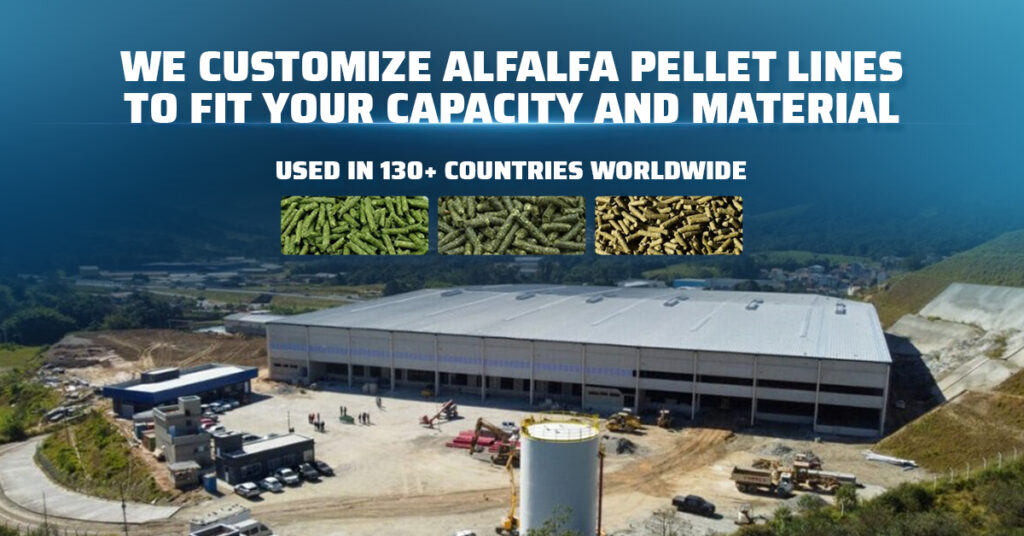
For companies targeting commercial markets, an industrial alfalfa pellet processing line solution can provide a complete workflow from raw material handling to finished product packaging.
Quality Control
Quality control is essential for businesses selling internationally.
A professional production system should monitor:
- Moisture levels
- Pellet durability
- Production consistency
- Packaging quality
Reliable quality management helps companies build long-term customer relationships.
What Makes a Successful Alfalfa Pellet Business Model?
Local Production for Regional Markets
Many agricultural companies begin by supplying nearby livestock farms.
Advantages include:
- Lower transportation costs
- Easier customer communication
- Faster market development
This approach allows businesses to gain production experience before expanding.
Large-Scale Production for Export Markets
Companies with sufficient raw material resources can develop larger projects focused on international sales.
A commercial pellet facility can supply:
- Overseas feed distributors
- Large livestock farms
- Animal nutrition companies
- Agricultural trading companies
Professional suppliers such as Richi manufacture can provide customized equipment solutions based on different investment goals and production requirements.
Key Factors Affecting International Competitiveness
Production Cost Control
The profitability of alfalfa pellet exports depends heavily on production costs.
Important cost factors include:
- Raw material price
- Energy consumption
- Labor expenses
- Equipment efficiency
- Transportation costs
Optimizing each stage helps businesses maintain competitive pricing.
Equipment Reliability
For commercial operations, equipment downtime can directly affect profitability.
Businesses should choose machines with:
- Strong structural design
- Durable wearing parts
- Stable operating performance
- Professional technical support
Market Adaptation
Different countries may have different requirements regarding:
- Pellet size
- Packaging
- Feed standards
- Customer preferences
Flexible production systems allow companies to adapt to various markets.
The Role of Automation in Future Pellet Manufacturing
Modern agricultural processing is moving toward automation and intelligent management.
Advanced pellet production facilities can integrate:
- Automatic feeding
- Centralized control systems
- Production monitoring
- Automatic packaging
Automation improves efficiency and reduces dependence on manual operation.
It also helps large companies achieve stable production quality when serving international customers.
Businesses interested in learning more about modern pellet processing trends can look at this website for additional industry information and technology insights.
Environmental Benefits of Alfalfa Pellet Production
Sustainable agriculture has become an important global topic.
Alfalfa pellet production contributes to sustainability in several ways.
Better Resource Utilization
Pelletizing allows more complete use of harvested forage materials and reduces unnecessary waste.
Reduced Transportation Impact
Higher product density means fewer shipments may be required compared with traditional forage transportation.
Supporting Renewable Agricultural Systems
Using locally available forage resources helps create more efficient agricultural supply chains.
These advantages make alfalfa pellets attractive not only from an economic perspective but also from an environmental perspective.
How Should Investors Evaluate an Alfalfa Pellet Project?
Before investing, companies should consider several important questions.
Is There Enough Raw Material Supply?
A successful plant requires reliable access to alfalfa.
Who Are the Target Customers?
Understanding market demand helps determine production scale and product positioning.
What Capacity Is Suitable?
Production capacity should match both current demand and future expansion plans.
For example, businesses entering commercial feed production may consider a 1-2 T/H alfalfa pellet production line for sale as a practical starting point for medium-scale operations.
What Technical Support Is Available?
Long-term success depends not only on equipment but also on installation guidance, operation training, and after-sales service.
Future Outlook of the Alfalfa Pellet Industry
The future of alfalfa pellet production is closely connected with global trends in livestock farming and sustainable agriculture.
Several developments are expected:
- Increasing demand for processed forage
- More automated production facilities
- Growing international feed trade
- Higher expectations for product consistency
As agricultural businesses continue searching for efficient ways to add value to forage resources, alfalfa pellets will remain an important product category.
Conclusion: Creating New Value From Forage Resources
Alfalfa pellet production provides agricultural businesses with a practical opportunity to enter the growing processed feed market.
By improving transportation efficiency, extending storage possibilities, and creating standardized feed products, pellet technology helps producers compete in both local and international markets.
For investors, choosing suitable equipment, understanding market requirements, and building an efficient production system are essential steps toward long-term success.
As global demand for high-quality animal nutrition continues to increase, alfalfa pellets will play an increasingly important role in the future development of the feed industry.