In the global shift toward renewable energy, biomass pellet production has evolved far beyond its original role as a simple agricultural waste recycling method. What was once considered a secondary rural activity has now become a structured, engineering-driven industrial sector that supports power generation, industrial heating, and sustainable fuel supply chains.
Today’s biomass industry is not defined by raw material availability alone. Instead, it is defined by how efficiently a system can transform unstable, heterogeneous biomass materials into standardized, high-density energy products.
This transformation requires advanced engineering systems, intelligent production planning, and highly stable mechanical structures.
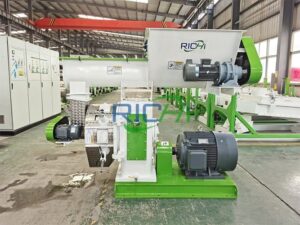
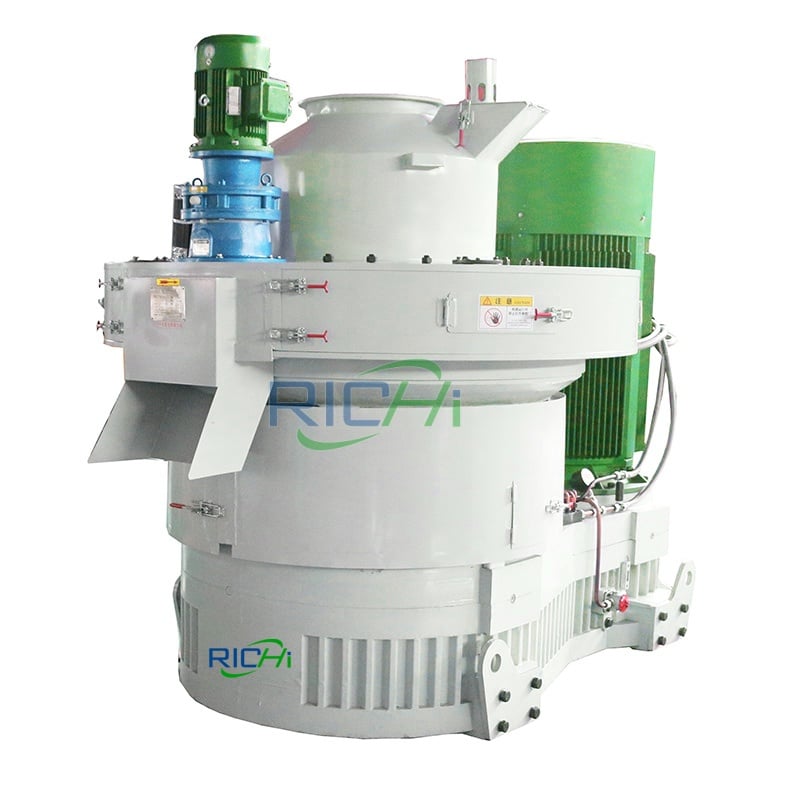
Among all core technologies in this industry, one system stands out as a foundation of modern pellet production: the Vertical ring die pellet machine.
From Agricultural Waste to Industrial Fuel Infrastructure
Biomass raw materials come from multiple industries:
- Forestry processing residues
- Agricultural crop waste
- Wood manufacturing by-products
- Food processing residues
- Energy crop plantations
In the past, these materials were burned or discarded. However, modern sustainability requirements have changed their value completely.
Now, they are seen as:
- Renewable fuel sources
- Industrial energy substitutes
- Carbon-neutral heating materials
- Export-grade energy commodities
But turning these raw materials into usable fuel is not simple. The biggest challenge is variability.
Each material has different:
- Moisture content
- Fiber length
- Density
- Ash composition
This means pellet production systems must be highly adaptive.
Why Engineering Design Matters More Than Raw Material Cost
Many investors entering the biomass sector initially focus on raw material pricing. However, experienced operators know that equipment efficiency has a much greater impact on profitability than material cost differences.
A poorly designed system leads to:
- High energy consumption
- Frequent shutdowns
- Uneven pellet density
- Excessive maintenance costs
In contrast, an optimized system improves:
- Output stability
- Energy efficiency
- Pellet durability
- Production continuity
This is why modern project developers increasingly evaluate systems such as the vertical ring die, which improves compression uniformity and operational stability under variable feedstock conditions.
The Importance of Production Capacity Strategy
One of the most critical decisions in biomass plant design is selecting the correct production capacity.
Choosing too small a system limits revenue potential. Choosing too large a system increases financial pressure and operational risk.
For example:
A 1 ton per hour vertical wood pellet machine is typically used in:
- Pilot projects
- Local biomass supply chains
- Small industrial heating systems
It allows operators to test raw materials and optimize production processes before scaling.
On the other hand, mid-sized systems such as a 2 tph vertical wood pellet machine are widely used in regional commercial production. They provide a balance between investment cost and production efficiency.
Industrial Expansion and High-Capacity Demand
As biomass markets mature, demand shifts from small local supply chains to large industrial systems.
Industries such as:
- Power generation plants
- District heating systems
- Large-scale industrial boilers
- Export fuel distribution networks
require continuous, stable pellet supply.
In these cases, operators often upgrade to systems such as a 10 tph vertical wood pellet machine, which supports uninterrupted industrial production.
At this scale, even minor inefficiencies can result in significant financial loss. Therefore, system stability becomes more important than raw output capacity.
Why Pellet Quality Determines Market Access
In global biomass trade, pellet quality is the primary factor determining market acceptance.
Buyers evaluate pellets based on:
- Density consistency
- Moisture level
- Ash content
- Mechanical durability
- Combustion efficiency
Poor-quality pellets are often rejected entirely, regardless of price.
This is why high-performance systems such as the pellet mill play a crucial role in ensuring consistent product quality across long production cycles.
A stable pellet structure improves:
- Transport durability
- Storage safety
- Combustion efficiency
- Customer satisfaction
Integrated Production Systems vs Single Machine Thinking
Modern biomass plants are no longer built around individual machines. Instead, they are designed as integrated industrial systems.
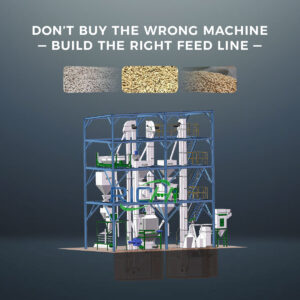
A complete pellet production line includes:
- Raw material crushing
- Drying systems
- Pelletizing units
- Cooling systems
- Screening equipment
- Packaging lines
Each stage affects the next.
If one stage fails, the entire production system becomes unstable.
This is why companies like Richi manufacture focus on providing integrated engineering solutions rather than isolated equipment.
Integrated systems improve:
- Production efficiency
- Energy optimization
- Operational stability
- Maintenance coordination
Investment Logic in Modern Biomass Projects
Biomass projects are increasingly treated as industrial investments rather than simple equipment purchases.
Investors now evaluate:
- Return on investment (ROI)
- Payback period
- Operational stability
- Market demand structure
- Supply chain reliability
Before making decisions, many buyers compare options such as pellet machine for sale listings, analyzing technical specifications, energy consumption, and maintenance requirements.
However, experienced investors understand that price is not the most important factor. Long-term operational cost matters more than initial investment.
Industry Knowledge as a Competitive Advantage
The biomass industry is evolving rapidly. New technologies, improved designs, and changing market demands require continuous learning.
Operators increasingly rely on technical resources such as blog here, where real-world operational experiences, system comparisons, and engineering insights are shared.
Knowledge helps operators:
- Avoid design mistakes
- Improve efficiency
- Reduce downtime
- Optimize production strategy
In modern biomass industries, knowledge is as important as equipment.
Global Market Trends Driving Growth
Several global factors are driving biomass pellet demand:
1. Carbon Neutrality Policies
Governments are enforcing strict emission reduction targets.
2. Energy Transition Programs
Industries are moving away from coal and fossil fuels.
3. Agricultural Waste Utilization
Countries are seeking solutions for large-scale agricultural waste management.
4. Industrial Fuel Demand
Factories require stable, clean-burning fuel alternatives.
Future Direction of Biomass Engineering
The next stage of biomass development will focus on:
- AI-based production control
- Fully automated pellet plants
- Multi-feedstock adaptability
- Lower energy consumption systems
- Real-time monitoring and optimization
These innovations will significantly increase production efficiency and reduce operational costs.
Conclusion
Modern biomass pellet production is no longer a simple mechanical process. It has become a complex industrial ecosystem combining engineering design, energy economics, and global market strategy.
Success depends on selecting the right technology, designing scalable production systems, and maintaining consistent product quality.
As global demand for renewable energy continues to rise, only highly efficient and intelligently designed biomass systems will remain competitive.
Related Post:https://pelletizerequipment.com/biomass-pellet-machine/