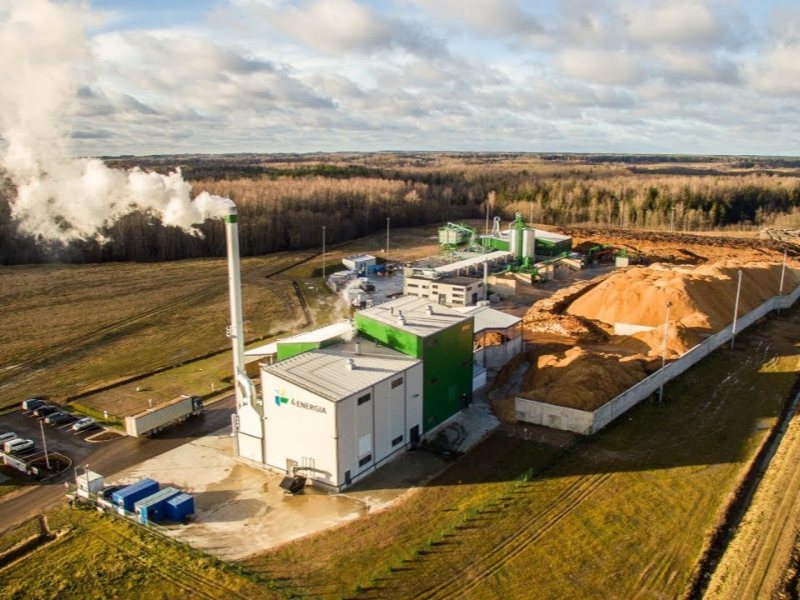
Indonesia is one of the world’s largest rice-producing countries, generating millions of tons of rice husk every year. Traditionally, rice husk has been treated as low-value agricultural waste, often burned openly or discarded near rice mills. In recent years, however, the rice husk pellet plant in Indonesia has emerged as a practical solution to convert this abundant by-product into standardized biomass fuel.
With growing energy demand, rising fossil fuel costs, and government support for renewable energy, rice husk pellet plants are becoming an important part of Indonesia’s biomass fuel landscape, especially in Java, Sumatra, and Sulawesi.
Why Rice Husk Pellets Are Suitable for Biomass Fuel
Rice husk pellets are primarily used as industrial biomass fuel rather than animal feed. Compared with loose rice husk, pelletized fuel offers higher bulk density, more stable combustion, and easier transportation. These advantages make rice husk pellets suitable for biomass power plants, industrial boilers, cement factories, and brick kilns.
Although rice husk has higher ash content than wood, its calorific value remains competitive when processed correctly. This requires a specialized pelletizing approach rather than standard wood pellet equipment, making a complete rice husk pellet plant solution critical for commercial success.
Typical Rice Husk Pellet Production Process
A standard rice husk pellet plant in Indonesia begins with raw husk collection directly from rice mills. Since rice husk usually has relatively low moisture content, drying requirements are lower than for many other biomass materials, reducing energy consumption during processing.
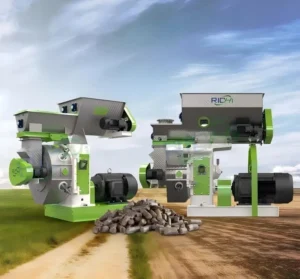
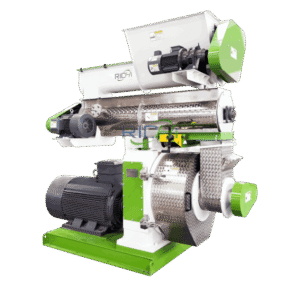
The production process starts with screening and cleaning to remove stones and impurities. The husk is then ground to improve particle uniformity before entering the pellet mill. High-strength pellet mills with wear-resistant dies are essential due to the abrasive nature of silica in rice husk. The finished pellets are cooled, screened, and packed through an integrated pellet line designed for continuous industrial operation.
Industrial Equipment Design Considerations
Rice husk pellet plants face different technical challenges compared to wood-based systems. High ash content, low lignin levels, and abrasive characteristics all influence equipment selection. Pellet mills must maintain stable compression without excessive die wear, while dust control systems are essential for safe operation.
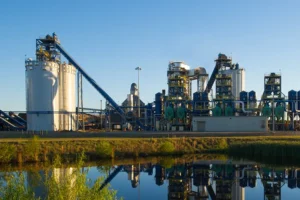
A well-engineered complete rice husk pellet plant solution typically integrates raw material handling, pelletizing, cooling, ash management, and automatic packaging. These systems are designed not just for output, but for long-term operational stability in tropical environments common across Indonesia.
Main Applications of Rice Husk Pellets in Indonesia
In Indonesia, rice husk pellets are widely used as biomass fuel for industrial steam boilers, rice mills with self-generated power systems, food processing plants, and small-scale biomass power stations. Many facilities replace coal or diesel partially or completely with rice husk pellets to reduce fuel costs and carbon emissions.
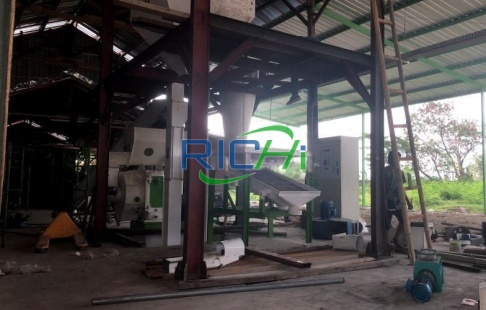
Export-oriented pellet plants also supply rice husk pellets to regional biomass markets in Southeast Asia. Investors exploring these opportunities often discover this info here through case studies showing strong demand from energy-intensive industries.
Economic and Environmental Benefits
From an economic perspective, rice husk pellets add value to a material that was previously a disposal burden. Rice mills gain additional revenue streams, while pellet plant operators benefit from stable raw material supply located close to production sites.
Environmentally, rice husk pelletization reduces open burning and landfill disposal, lowering air pollution and greenhouse gas emissions. As a renewable biomass fuel, rice husk pellets support Indonesia’s long-term goals for cleaner energy and sustainable industrial development.
(Related Post: https://biomasspelletizer.com/rice-husk-pellet-plant-in-indonesia)
Project Scale and Investment Outlook
Rice husk pellet plants in Indonesia range from small-capacity units serving local industries to large-scale industrial projects supplying power plants and export markets. Typical production capacities range from 1 to 10 tons per hour, depending on raw material availability and end-use demand.
With rising interest in biomass co-firing and renewable energy policies, the rice husk pellet plant in Indonesia is expected to see continued growth. Projects that focus on efficient logistics, reliable equipment, and consistent pellet quality are best positioned for long-term success.
Future Development Trends
Future rice husk pellet plants will increasingly emphasize automation, energy efficiency, and emission control. Integration with rice milling operations and industrial energy users will further improve cost efficiency.
As technology improves and market acceptance expands, rice husk pellets are likely to become a core biomass fuel option in Indonesia’s renewable energy mix, transforming agricultural waste into stable industrial value.