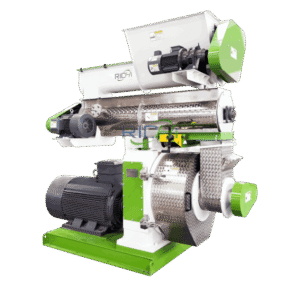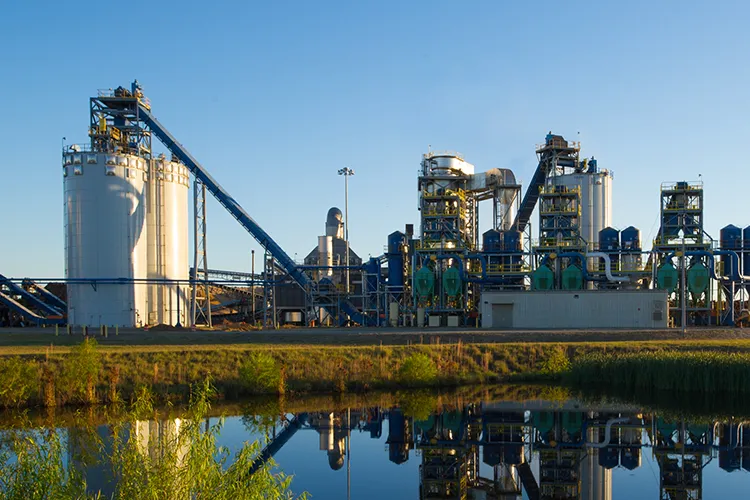
As global advocacy for sustainable agriculture intensifies, the organic fertilizer industry has become a key pillar of green agricultural development. The organic fertilizer production line, an integrated system that converts agricultural and animal husbandry wastes into high-quality organic fertilizer pellets, plays a vital role in promoting waste recycling and soil fertility improvement. Beyond organic fertilizer production, the fertilizer sector also relies on specialized pellet machines and granulation lines for other fertilizer types like compound fertilizer and bio fertilizer. Choosing the right organic fertilizer production line and matching equipment is crucial for efficient, profitable operations in the green agriculture and fertilizer markets.
Core Advantages and Working Process of Organic Fertilizer Production Line
A complete organic fertilizer production line integrates multiple professional processes, featuring systematic advantages and scientific working procedures to ensure stable production of high-quality organic fertilizer.
- Key Advantages: It adopts automated continuous operation, integrating processes from raw material pretreatment to finished product packaging, with a production capacity ranging from 1 ton to 40 tons per hour to meet large-scale agricultural needs. Equipped with intelligent aerobic fermentation technology, it shortens the fermentation cycle to 7-10 days, significantly improving production efficiency compared to traditional composting. The enclosed design with biofilter deodorization system removes over 95% of harmful gases such as ammonia, ensuring environmental friendliness. The finished organic fertilizer has stable quality, with organic matter content exceeding 40% and abundant nutrients, which can improve soil structure and promote crop growth. By recycling wastes such as livestock and poultry manure, straw, and sludge, it realizes “turning waste into treasure”, solving environmental pollution problems of waste stacking. Additionally, it conforms to global green agriculture policies and enjoys relevant policy support.
- Working Process: The organic fertilizer production line consists of six core links: raw material pretreatment, fermentation, crushing, mixing, pelleting, and packaging. First, raw materials such as chicken manure, cow manure, straw, and mushroom residue are cleaned to remove impurities and then crushed into fine particles. Then, the crushed materials are mixed with biological strains and sent to the fermentation system, where the temperature is controlled at 55-65℃ for aerobic fermentation to achieve harmless treatment such as sterilization and deodorization. After fermentation, the materials are crushed again to ensure uniform particle size, and then mixed with inorganic nutrients according to crop needs. The mixed materials enter the organic fertilizer pellet machine for extrusion molding, and the produced pellets are dried and cooled to adjust moisture content. Finally, the qualified pellets after screening are packaged into finished products for storage and transportation.
Specialized Fertilizer Pellet Machines for Other Fertilizer Types
Different fertilizer types have distinct physical and chemical properties, requiring specialized pellet machines to ensure production efficiency and product quality. Common types besides organic fertilizer pellet machines include:
- Compound Fertilizer Pellet Machine: Tailored for processing compound fertilizer with mixed nitrogen, phosphorus, and potassium nutrients. It adopts a drum granulation or disc granulation structure with uniform mixing and granulation effect, suitable for the granularity requirements of compound fertilizer. The produced compound fertilizer pellets have stable nutrient content and good solubility, widely used in various crop planting.
- Bio Fertilizer Pellet Machine: Designed for bio fertilizer containing beneficial microorganisms. It features a low-temperature granulation design to retain the activity of beneficial strains, making the fertilizer effective in improving soil microecology. Equipped with a sealed feeding device to avoid microbial contamination, ensuring stable operation.
- Organic-Inorganic Compound Fertilizer Pellet Machine: Specialized in processing mixed fertilizer of organic and inorganic components. Due to the different properties of organic and inorganic materials, it is equipped with a dual-mixing system and a special granulation die with optimized compression ratio, enabling efficient granulation into high-quality pellets with balanced nutrients.
- Slow-Release Fertilizer Pellet Machine: Suitable for slow-release fertilizer production with coating requirements. It adopts a two-step granulation-coating structure, first forming the fertilizer core and then coating the slow-release film, producing pellets with controlled nutrient release rate, which can reduce fertilizer loss and improve utilization rate.
In addition, we also have specialized chicken manure pellet machines for sale with capacities ranging from 1 to 26 T/H.
Diverse Fertilizer Granulation Lines for Specific Fertilizer Types
Based on the characteristics of different fertilizer types, customized granulation lines maximize resource utilization and production efficiency, forming a complementary development pattern with organic fertilizer production lines.
- Compound Fertilizer Granulation Line: Focuses on compound fertilizer processing, equipped with high-efficiency mixing equipment and precise batching systems to ensure uniform nutrient distribution. The granulation section adopts drum or disc granulators, and the whole line is equipped with drying and cooling systems to meet the moisture requirements of compound fertilizer. Suitable for large-scale fertilizer production enterprises.
- Bio Fertilizer Production Line: Customized for bio fertilizer production, the preprocessing section is equipped with sterile mixing equipment and low-temperature drying equipment to retain microbial activity. The line adopts sealed design to avoid contamination, with strong adaptability to different strains of bio fertilizer.
- Organic-Inorganic Compound Fertilizer Production Line: Integrates organic material fermentation and inorganic material mixing functions, with a dual granulation system to adapt to the mixed characteristics of raw materials. The mixing section can accurately control the ratio of organic and inorganic components, suitable for fertilizer enterprises producing multi-nutrient fertilizer.
- Slow-Release Fertilizer Production Line: Optimized for slow-release fertilizer processing, with a special coating system after granulation. It can adjust the coating thickness according to the required release period, and the line is equipped with quality detection equipment to ensure the slow-release effect. Suitable for high-end fertilizer production enterprises.
We also have other 0.5-40T/H biomass pellet production lines to match your various raw material requirements.
RICHI: Trusted Supplier of Organic Fertilizer Production Line
When selecting an organic fertilizer production line and matching equipment, choosing a reliable brand is crucial. RICHI, a professional manufacturer of biomass and fertilizer machinery with decades of experience, has won wide recognition from global users for high-quality products and comprehensive services.
RICHI’s organic fertilizer production line adopts a modular design, which can be customized according to user needs such as raw material type (livestock and poultry manure, straw, sludge, etc.) and production scale. The core equipment is equipped with high-wear-resistant components and intelligent control systems to ensure stable operation and easy maintenance. In addition, RICHI provides one-stop services including pre-sales on-site investigation, production line design, on-site installation and commissioning, and after-sales technical training, helping users realize efficient and environmentally friendly organic fertilizer production.(discover this info here)
Key Considerations for Choosing Organic Fertilizer Production Line
To select the most suitable organic fertilizer production line, the following factors should be considered:
- Production Scale: Small-scale agricultural cooperatives (1-5 tons/hour) can choose a compact modular line; large-scale organic fertilizer enterprises (10 tons/hour or more) should select a fully automated large-scale line to meet mass production needs.
- Raw Material Characteristics: According to the type of raw materials (such as livestock and poultry manure with high moisture content or straw with high fiber content), select matching pretreatment and fermentation equipment to ensure production efficiency.
- Environmental Requirements: Prioritize lines with advanced deodorization and dust removal systems to meet local environmental standards, avoiding subsequent modification costs.
- After-Sales Service: Choose manufacturers like RICHI that provide timely after-sales services including technical support and spare parts supply, to ensure uninterrupted production.
Conclusion: Choose Organic Fertilizer Production Line for Green Agricultural Development
The organic fertilizer production line is a core equipment system for developing the green agriculture industry. Matching it with specialized fertilizer granulator machines and granulation lines for other fertilizer types can form a comprehensive fertilizer production system.
Other fertilizer granulating machines can be viewed here:https://pelletmakingmachine.com/fertilizer-granulator-machine/
By considering production scale, raw material characteristics and environmental requirements, and cooperating with a trusted brand like RICHI, you can obtain high-performance organic fertilizer production line solutions. This will help you realize efficient recycling of agricultural wastes, produce high-quality organic fertilizers, seize opportunities in the green agriculture market, and contribute to global sustainable agricultural development.
By considering production scale, raw material characteristics and environmental requirements, and cooperating with a trusted brand like RICHI Machinery, you can obtain high-performance organic fertilizer production line solutions. This will help you realize efficient recycling of agricultural wastes, produce high-quality organic fertilizers, seize opportunities in the green agriculture market, and contribute to global sustainable agricultural development.